A new boundary fence has to do more than mark where one property ends and another begins. It needs to screen outdoor areas, handle Melbourne weather, suit the home, and remain straight and presentable after years of use. When weighing up timber versus Colorbond privacy fences, the right answer usually comes down to the site, the desired finish and how much ongoing maintenance you are prepared to take on.
Both are proven choices for residential boundaries across Melbourne and the Mornington Peninsula. Timber offers warmth and flexibility, while Colorbond steel delivers a crisp, low-maintenance finish. Neither is automatically better for every property.
Timber versus Colorbond privacy fences: the main difference
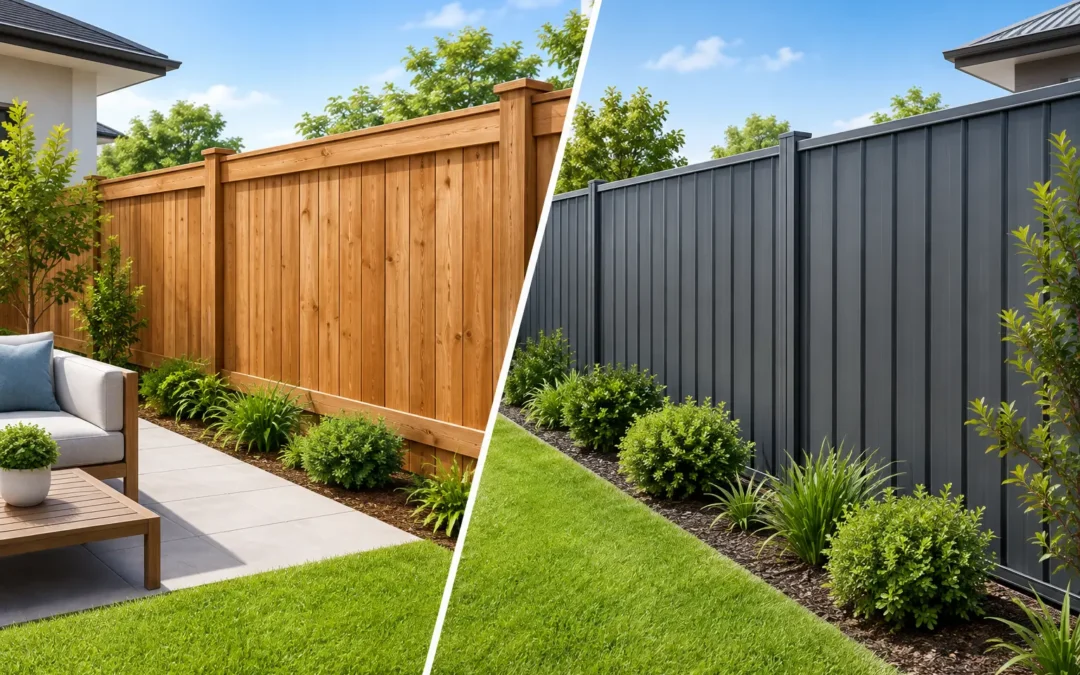
The most visible difference is character. A timber paling fence has a natural, traditional appearance that works especially well with established gardens, weatherboard homes and properties where a softer boundary is preferred. It can be painted, stained or left to weather, depending on the look you want.
Colorbond fencing has a cleaner, more uniform appearance. Its steel panels and posts create straight lines with no gaps between palings, making it a popular option for contemporary homes, townhouses and side boundaries where privacy is the priority. With a range of standard colours available, it can be selected to complement roofing, gutters and other exterior finishes.
Behind appearance, the systems are constructed differently. Timber fencing is generally built from individual posts, rails and palings. Colorbond fencing uses purpose-made steel posts, rails and sheets. That affects how each fence performs in wind, on sloping ground and over time.
Privacy and day-to-day performance
Both materials can provide effective visual screening when correctly specified and installed. A standard timber paling fence gives solid privacy, although small gaps may develop as palings shrink, move or weather. This is not always a problem, but it can be noticeable on a close boundary or beside a patio, pool area or neighbour’s window.
Colorbond sheets overlap to form a continuous screen. There are no vertical paling gaps, and the surface presents the same neat finish from both sides. For narrow side passages, higher-density housing or boundaries exposed to neighbouring living areas, that consistent coverage can be a deciding factor.
Noise is sometimes raised in the timber versus Colorbond privacy fences discussion. A fence can reduce direct sightlines and soften some general neighbourhood noise, but it should not be treated as a purpose-built acoustic barrier. The result depends on the height, gaps, surrounding buildings, vegetation and source of the noise. If traffic or commercial noise is a major concern, a contractor should assess whether a specialised acoustic solution is required.
Maintenance: where the long-term difference shows
Timber needs more attention over its working life. It is an organic material exposed to sun, rain, moisture in the soil and insect activity. Quality treated timber and sound installation go a long way, but palings can split, cup or loosen over time. Posts and rails may eventually need repair or replacement, particularly where drainage is poor or sprinkler systems regularly wet the fence line.
Painting or staining can refresh a timber fence and extend its visual appeal, but it is an ongoing job. The benefit is flexibility: an older timber fence can often be repaired one section at a time, and its colour can be changed when the exterior of the house is updated.
Colorbond steel is generally the lower-maintenance option. It does not rot, need painting or attract termites. Occasional washing is usually enough to remove dust, cobwebs and grime. In coastal or highly exposed locations, regular cleaning is particularly worthwhile to remove salt deposits and maintain the finish.
Low maintenance does not mean no maintenance. Scratches should be attended to, and soil, mulch or garden beds should not be built up against steel panels. Poor drainage, trapped moisture and incompatible materials can shorten the life of any fence. Good site preparation remains as important as the fence material itself.
Strength, wind and difficult sites
A privacy fence is a solid surface, so wind loading matters. This is especially relevant on open blocks, elevated sites, corner properties and parts of the Mornington Peninsula that receive stronger coastal conditions. A fence that looks fine on a sheltered suburban boundary may require a more considered design in an exposed location.
Colorbond panels present a continuous face to the wind. The posts, footings, rail system and panel arrangement need to be suitable for the height, length and exposure of the fence. Installed correctly, it is a strong and reliable system. Installed with undersized posts or inadequate footings, any solid-panel fence can be vulnerable.
Timber fencing also needs sound posts and footings, but its individual palings allow a small degree of airflow between them. That does not remove wind pressure from the structure, particularly as timber ages or if the fence includes tightly lapped palings, but it can change how the load is distributed.
Sloping blocks deserve a separate conversation. Timber is highly adaptable for stepped boundaries, irregular levels and sites where retaining work is also needed. Colorbond can also be stepped and customised, though planning the panel layout early helps avoid awkward short sections or open gaps beneath the fence. Where there is a significant level change, retaining walls and fencing should be designed as related elements rather than treated as separate jobs.
Cost: look beyond the first quote
It is tempting to compare only the per-metre price, but the installed cost of a privacy fence depends on more than its material. Fence height, access, demolition and removal of the existing fence, post-hole conditions, retaining, gates, site slope and boundary layout all affect the final figure.
Timber can be an economical choice for straightforward residential boundaries, particularly where a classic paling finish is suitable. It may also make sense if only part of an existing timber fence needs replacing and matching the surrounding fencing matters.
Colorbond can cost more upfront in some applications, especially where custom colours, taller panels, difficult access or upgraded structural components are required. Its lower maintenance needs and long service life can improve value over time. The practical question is not simply which option is cheapest on installation day, but which fence best suits the property for the years ahead.
A like-for-like quote is the fairest way to compare options. Check the proposed height, post spacing, post and rail materials, footings, removal works, capping, gates and any retaining requirements. A low initial price can leave out work that is necessary for a complete, durable boundary.
Appearance and neighbourhood fit
Timber gives a property a softer edge. It sits naturally beside garden beds, climbing plants and mature landscaping, and it can be customised with capping, exposed posts or a painted finish. For heritage-style homes and established streetscapes, timber often feels like the more natural fit.
Colorbond is often chosen for its tidy, contemporary look. The panels keep their colour consistently and do not show the individual ageing that comes with timber. It is well suited to new builds, rental properties, compact lots and homes where owners want a fence that requires little attention after installation.
There is also room for a combined approach. Some properties use Colorbond on long side or rear boundaries for privacy and durability, then timber or feature cladding near a front garden where appearance is more important. Gates, screening and retaining can be matched to create a more considered result.
Approvals, boundaries and professional installation
Before work starts, confirm the boundary location and discuss the proposal with adjoining owners. In Victoria, dividing fence responsibilities are commonly shared, but the circumstances can vary. A clear agreement on fence type, height, cost and access helps prevent disputes once materials arrive on site.
Height restrictions, planning controls and estate guidelines may also apply. A standard boundary fence is often straightforward, but taller fencing, retaining works, corner blocks, pool barriers and properties affected by overlays can require additional checks. Privacy fencing should never compromise a required pool safety barrier or interfere with drainage.
The installation detail matters as much as the product. Posts need to be set to appropriate depths, lines need to be true, and the fence should account for ground levels and water flow. Materials and installation should meet relevant Australian Standards where applicable, with the final system suited to the conditions of the site.
For more than 40 years, Minster Fencing has helped Melbourne property owners select and install practical boundary solutions. A site-specific quote can clarify whether timber, Colorbond or a tailored combination is the better fit for your block, budget and expected finish.
The best privacy fence is the one that suits the way your property is used, not merely the one that looks best in a brochure. Start with the boundary, exposure, levels and maintenance expectations, then choose a system built to remain dependable long after the installation is complete.