
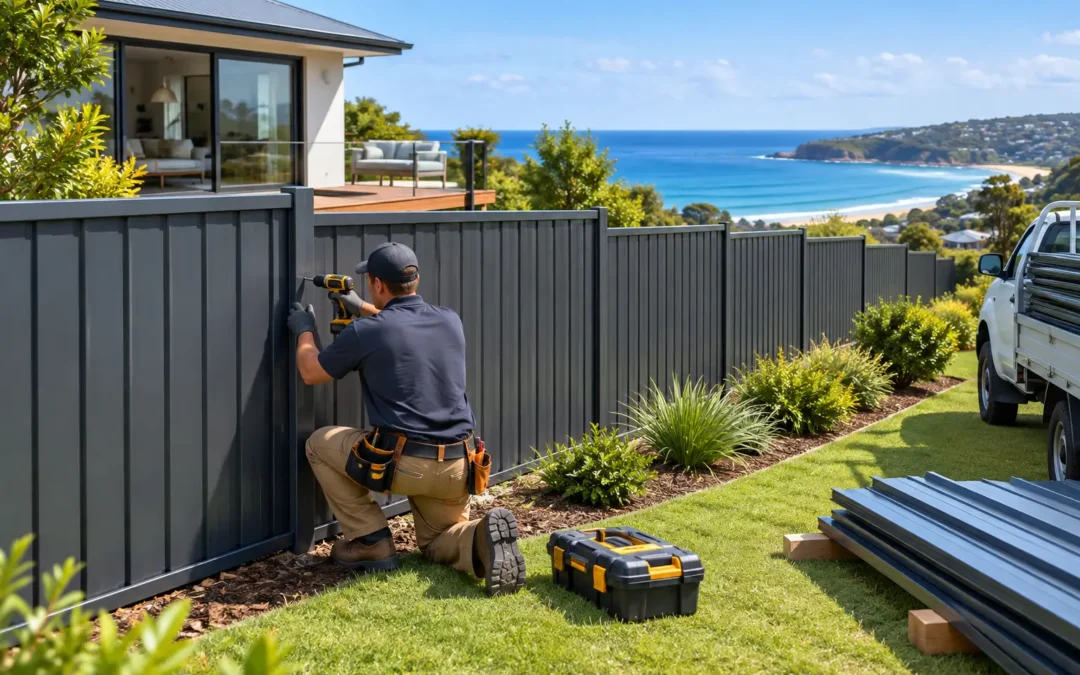
A Colorbond fence installer Mornington Peninsula homeowners can rely on does more than set a row of posts and attach panels. On a peninsula block, the job often needs to account for sloping ground, coastal exposure, established gardens, tight side access and shared boundary requirements. The result should be a straight, secure fence that suits the property, handles local conditions and looks properly finished from both sides.
Colorbond steel fencing remains a practical choice for new homes, renovations, investment properties and commercial boundaries. It gives a clean, private finish without the regular painting, oiling or replacing associated with some other fencing materials. But the performance of the fence depends heavily on the measuring, footing preparation, post placement and finishing carried out before the final panel is in place.
What a quality Colorbond fence installation involves
A professional installation starts with the site rather than a standard panel size. Fence lines need to be checked for levels, changes in direction, obstructions, drainage paths and access. On many Mornington Peninsula properties, a boundary may run across a fall, meet a retaining wall or pass close to a shed, pool area, driveway or established landscaping.
The installer should establish where the fence is to sit, how the height will work across the site and whether stepped or raked panels are the better solution. Stepped fencing keeps panels level and drops them at each post. Raked fencing follows the slope more closely. Neither approach is automatically right. The best option depends on the grade, the required privacy, the look of the boundary and the gap that may be left beneath the fence.
Posts must be set accurately and into suitable concrete footings. This is what keeps the line straight, supports the fence in wind and helps prevent movement over time. Once rails, sheets and capping are fitted, careful alignment still matters. Small errors become obvious over a long side boundary, particularly when the fence is viewed from a deck, driveway or neighbouring property.
A tidy contractor will also plan the practical details: protecting nearby garden beds, managing excavated soil, keeping access clear where possible and leaving the work area clean at completion.
Why Mornington Peninsula conditions matter
The Mornington Peninsula includes everything from compact suburban blocks in Mornington to larger rural-residential sites, exposed coastal properties and newer estates. A fencing solution that works well in one location may need a different approach a few kilometres away.
Wind exposure is a major consideration on open sites. A solid Colorbond fence can catch wind, so post spacing, footing depth and installation quality need to suit the conditions. Where a fence adjoins a more exposed area, an experienced contractor can assess whether the design, height or construction details should be adjusted.
Coastal air is another factor. Colorbond steel is manufactured for Australian conditions, but it still needs to be specified and installed with its environment in mind. Properties closer to the bay or ocean can be subject to salt exposure, and owners should discuss the site location and finish requirements before materials are ordered. Keeping the fence clear of trapped soil, leaf litter and persistent sprinkler overspray also helps maintain its appearance.
Ground conditions can vary just as much. Sandy soil, clay, filled ground and uneven sites each affect how posts are installed. A site inspection is the right time to identify issues that are not visible in a quick online estimate.
Choosing the right fence height, profile and colour
Colorbond fencing is valued for its simple, consistent appearance, but there is still plenty to decide before installation. Height affects privacy, wind exposure and the relationship with adjoining properties. Local planning controls, estate guidelines and pool barrier requirements may also apply depending on the location and purpose of the fence.
For a standard side or rear boundary, the aim is usually privacy and a clean finish. Front boundaries may call for a lower or more open design to retain sightlines and street appeal. Commercial sites, schools and sporting facilities may need a different system altogether, such as tubular, chain-link, welded mesh or palisade fencing, depending on security and access requirements.
The colour selection should work with the home, roof, paving and garden rather than simply following the fence next door. Darker tones can make a fence recede behind planting and suit contemporary homes. Lighter colours can feel less imposing in a narrow side passage but may show dust or marks more readily. A good fence line should support the overall property, not become its main feature.
Custom details can also make a substantial difference. Plinths can help manage small level changes at the bottom of a fence, while lattice-style extensions or carefully planned transitions can improve privacy where appropriate. Gates should be considered at the same time as the fence, especially where there is a side path, bin access, service area or requirement for secure entry.
Common site issues that should be resolved early
The least expensive quote is not always the most economical outcome if important site conditions have been missed. A clear, site-specific scope reduces surprises once work begins.
Boundary location is one example. A fence installer can work to an agreed line, but if there is uncertainty about the legal boundary, it should be resolved before construction. Existing fences are not always positioned exactly on title boundaries, particularly on older properties.
Retaining is another issue that needs proper consideration. A Colorbond fence is not a retaining wall and should not be expected to hold back significant soil. If the site has a level difference, the retaining solution and fence installation need to be planned together. This avoids loading the fence incorrectly or creating a finish that is difficult to maintain.
Underground services also need attention. Water, gas, electrical and communications services may cross the work area. Access restrictions, tree roots, concrete paths and narrow gaps beside buildings can affect the installation method, timing and cost. Raising these details during quoting gives the contractor the opportunity to allow for them properly.
What to look for in a Colorbond fence installer
Experience matters most when the site is not perfectly flat or straightforward. Ask how the contractor manages slopes, exposed locations, gates, retaining interfaces and difficult access. The answers should be practical and specific to the property, not a generic promise that every job is the same.
It is also sensible to ask what is included in the quote. Confirm the fence length and height, selected colour, post and rail arrangement, removal of any existing fence, disposal requirements, gate work and any allowance for uneven ground. If materials or installation works need to comply with relevant Australian Standards, this should be understood from the outset, particularly on commercial, education, sporting and security projects.
Reliable communication is equally valuable. Property owners need to know when materials are expected, when the team will attend and whether access is required through a neighbour’s property. Builders and facilities managers need a contractor who can coordinate with other trades, work to agreed site requirements and keep the job moving without compromising workmanship.
Minster Fencing brings more than 40 years of operational experience and four generations of family trade continuity to fencing projects across Melbourne and the Mornington Peninsula. That depth of experience is useful when a straightforward boundary fence becomes a project involving slopes, access, gates, retaining works or a specialised perimeter requirement.
Getting the best result from your new fence
Before requesting a quote, take note of the approximate fence length, preferred height, any gates required and the condition of the existing boundary. Photos can be useful for an initial discussion, but an on-site assessment is the best way to confirm levels, access and any issues that may affect installation.
It also helps to speak with adjoining owners early where the fence is shared. Agreement on the fence style, colour, height and timing can prevent unnecessary delays. If an old fence is leaning, damaged or unsafe, make this clear so removal and temporary site security can be considered.
Once installed, a Colorbond fence needs only simple care. Rinse off accumulated dust, salt residue or garden spray when needed, keep garden growth from sitting against the steel and check gates periodically to make sure they continue to swing and latch freely. These small steps help the fence remain neat and functional for years.
A well-installed Colorbond fence gives a property a defined edge, useful privacy and a finish that is easy to live with. For a Mornington Peninsula project, the most helpful next step is a site-specific, obligation-free quote that considers the ground, exposure, access and the way the fence needs to work every day.