
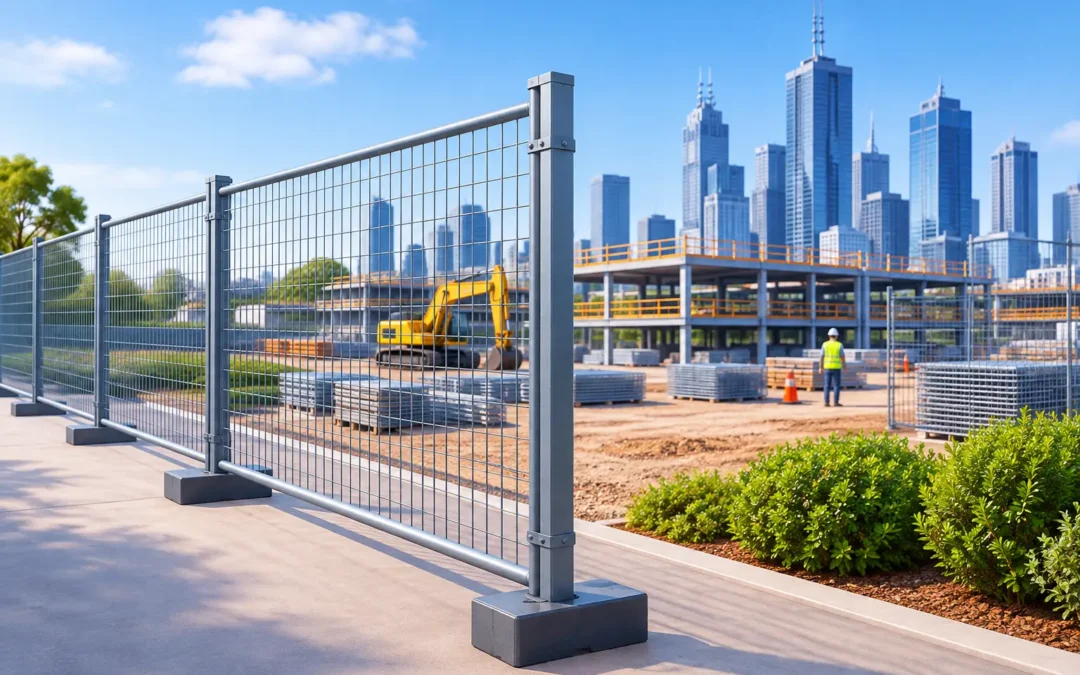
A fence line is often the first point of contact for a site – and, when it is poorly specified, the first weak point. Welded mesh security gives Melbourne property owners and site managers a clean, hard-wearing perimeter solution that is more difficult to cut, climb or force than many light-duty fencing options. It suits projects where visibility, strength and a professional finish all matter.
For warehouses, schools, sporting facilities, commercial yards and higher-security residential sites, the right system is not simply a matter of choosing a mesh panel. Panel design, post spacing, footing depth, ground conditions, gate arrangement and the way the fence meets existing structures all affect the finished result.
What welded mesh security is designed to do
Welded mesh fencing is made from steel wire welded at each intersection to form a rigid panel. Unlike flexible chain-wire fabric, the panel holds its shape and creates a more structured barrier. Many security systems use small apertures and heavier wire, making it harder to gain a foothold or get cutting tools through the mesh.
This does not mean every welded mesh fence provides the same level of protection. A low panel with a wide aperture is suitable for a simple boundary or internal enclosure, while an anti-climb security system may require taller panels, closely spaced horizontal wires, reinforced posts and purpose-designed fixings. The right specification depends on what needs protection, the likely risks and how the site operates each day.
A well-planned system can help define access points, protect equipment, control pedestrian movement and keep an open sightline across the property. That visibility is a practical advantage for facilities managers and school administrators, as it supports passive surveillance without making the site feel closed in.
Where welded mesh security works best
Welded mesh is a strong fit for sites that need more than a standard boundary fence but do not necessarily require solid screening. Industrial compounds, logistics areas, service yards and storage facilities commonly use it around plant, stock and loading areas. Its straight lines and rigid construction also make it suitable for commercial developments where presentation matters at the street frontage.
Schools and community facilities often need fencing that separates public and restricted areas while maintaining clear visibility. A properly designed mesh fence can secure bike compounds, maintenance zones, bin areas, play spaces and equipment storage without creating hidden corners.
For sporting clubs, welded mesh may be used around courts, clubrooms, storage areas or spectator boundaries. The chosen panel and height should match the use. Ball-stop fencing, perimeter security and internal access control each place different demands on the material and installation.
Residential applications are more selective, but can be highly effective. Homeowners may use welded mesh security for side boundaries, pool-adjacent enclosures where applicable requirements are met, dog runs, rear-lane access or protecting a workshop. Where appearance is a priority, powder-coated panels can provide a neater architectural look than conventional chain-wire fencing.
The details that determine real security
Security fencing performs as a system. Strong mesh fixed to undersized posts, shallow footings or an unsuitable gate will not provide the protection expected from the panels alone.
Panel aperture and wire thickness
A smaller mesh aperture reduces climbing opportunities and makes it more difficult to reach through the fence. Wire thickness contributes to rigidity and resistance to cutting or deformation. Heavier is not automatically better, however. It needs to be balanced with the required fence height, post design, wind exposure and budget.
For a low-risk internal enclosure, a lighter panel may be appropriate. For a perimeter protecting valuable stock, vehicles or restricted operations, a purpose-designed security mesh is usually the better choice.
Posts, rails and footings
Posts transfer force from the fence into the ground. Their size, wall thickness and spacing should be matched to the panel system and site conditions. Corner posts, end posts and gate posts experience greater load and generally need additional consideration.
Footings matter just as much. Sandy ground, reactive clay, sloping blocks and areas close to existing paving can all change the installation approach. Experienced installers assess these conditions before work begins, rather than applying the same footing detail to every fence line.
Fixings and anti-tamper features
A security panel should be secured with fittings that suit the system, not improvised hardware. Tamper-resistant fixings, full-length clamp bars or specialised brackets can reduce opportunities for panels to be removed from the outside.
The bottom of the fence also needs attention. Gaps beneath panels can invite access by people or animals, particularly where the ground falls away. Depending on the site, this may be addressed through stepped panels, raked sections, ground beams or careful excavation and levelling.
Gates are part of the perimeter
A secure fence with a weak gate is a common and avoidable problem. Swing gates, sliding gates and pedestrian gates need the correct frame strength, hinges, latches and locking arrangements for their size and frequency of use. Vehicle access points may also require automation, keypad entry, intercoms, bollards or separate pedestrian access to avoid gates being left open during busy periods.
Choosing height and layout for your site
Fence height should be based on the site risk, planning considerations, neighbouring properties and the practical function of the area. A taller fence can be a worthwhile deterrent, but it may need a more substantial support structure and can affect visual impact, overshadowing or local approval requirements.
Layout is equally important. A straight, uninterrupted run is generally simpler and more economical than a boundary with multiple turns, level changes and obstructions. Yet security is rarely achieved by taking the shortest route. The fence should close off genuine access paths, tie neatly into buildings or existing barriers, and avoid creating gaps around drainage lines, retaining walls and services.
Before installation, it is worth identifying where staff, residents, deliveries, visitors and emergency services need to enter. A clear access plan prevents the costly adjustment of gates after the fence is complete.
Finish, durability and maintenance
Galvanised steel provides corrosion protection, while powder coating adds colour and another layer of finish. Black remains popular for commercial and security fencing because it is understated and maintains visibility through the mesh, though other colours may better suit a building palette or surrounding fence line.
Coastal and high-exposure locations around the Mornington Peninsula deserve particular consideration. Salt air, moisture and wind can shorten the service life of poorly selected materials. The coating system, post caps, cut edges and fixings should all be considered together rather than assuming a standard finish will suit every environment.
Welded mesh fencing is generally low maintenance, but it is not maintenance-free. Inspect it periodically for impact damage, loose fixings, coating scratches, leaning posts and vegetation growth. Keep shrubs and stored materials clear of the fence where possible, as they can create climbing assistance, conceal damage or hold moisture against the steel. Gates should be checked regularly for hinge wear, latch alignment and smooth operation.
Compliance and a professional installation
Security fencing can involve more than the fence itself. Depending on the project, there may be requirements relating to boundary position, pool safety, school safety, access, structural performance, local planning controls or Australian Standards. A contractor should consider the applicable requirements for the specific site and explain any decisions that affect the installation.
Clean execution also matters. Panels should be aligned, posts set consistently, gates adjusted correctly and the work area left tidy. These basics make a visible difference to how the perimeter performs and how the property presents.
Minster Fencing brings more than 40 years of fencing experience and four generations of family trade knowledge to welded mesh, gates and complete perimeter projects across Melbourne and the Mornington Peninsula. Site-specific quoting allows the team to assess the ground, access, intended use and level of protection before recommending a system.
The most useful first step is to walk the boundary with the real daily use in mind: who needs access, what must stay protected, where vehicles move and where a gap would cause a problem. From there, a properly specified welded mesh fence can do its job quietly for years while keeping the site secure and well presented.