A boundary fence does more than mark where one property ends and another begins. It can create privacy around a backyard, control access to a worksite, protect students at a school or secure valuable equipment after hours. The right boundary fencing options depend on the site, the level of security required, local conditions and the way the property needs to function every day.
For Melbourne property owners and facilities managers, the cheapest fence is not always the best value. A suitable system should be properly specified, installed on sound footings and selected for its long-term performance, not simply its upfront price.
Boundary fencing options to suit the site
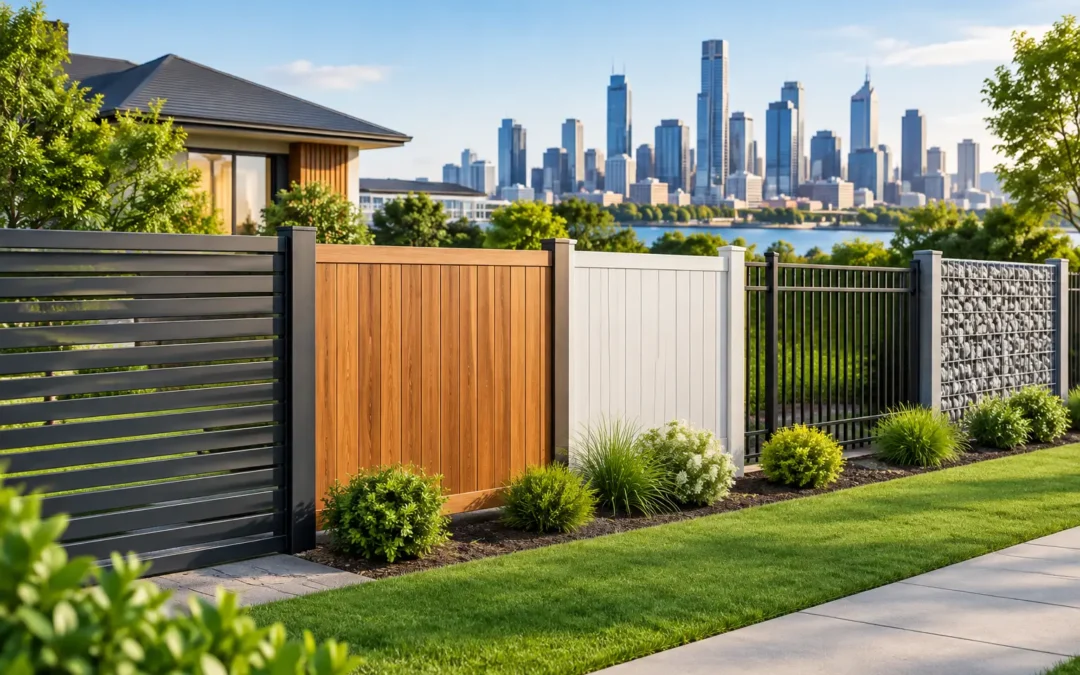
Different fencing systems solve different problems. A front or side boundary at a home may need privacy and a neat finish. A commercial yard may need clear visibility, controlled entry and resistance to climbing or impact. Sporting grounds, schools and industrial facilities often require a higher, more specialised system.
Colorbond fencing for privacy and clean lines
Colorbond fencing remains a practical choice for residential side and rear boundaries. It provides solid screening, requires minimal routine maintenance and is available in a range of colours to suit the home, garden and surrounding structures.
It is particularly useful where neighbouring homes are close together or where outdoor living areas need privacy. Custom Colorbond fencing can also be designed around site levels, gates and existing structures. On sloping blocks, careful planning is needed to decide whether the fence should step with the ground or follow the contour. Getting this right affects both appearance and how well the fence closes gaps near the ground.
Colorbond is not the answer for every location. It offers privacy, but it does not provide visibility through the boundary, and exposed sites may require thoughtful post sizing and footing design. A site inspection helps determine the appropriate height, panel arrangement and support structure.
Timber fencing for a traditional residential boundary
Timber paling fencing is familiar across Melbourne suburbs because it suits established homes, new builds and garden settings. It can offer good privacy, is adaptable around uneven ground and can be finished with a capping or timber feature for a more considered look.
The trade-off is maintenance and material movement over time. Timber is a natural product, so exposure to moisture, sun and ground conditions can affect its appearance and service life. Proper post installation, drainage considerations and quality materials make a real difference. Timber can also be paired with wire or steel elements where a property needs a less enclosed look without losing a defined boundary.
Tubular fencing for visibility and controlled access
Tubular steel fencing is a strong option where a property needs a clear, defined perimeter without blocking sightlines. It is commonly used around front boundaries, pools, schools, commercial premises and shared access areas. Its clean profile can complement contemporary homes while giving facilities managers a durable, low-maintenance solution.
For sites where access control matters, tubular fencing works well with pedestrian gates, driveway gates, keypads and other entry arrangements. Fence height, rail spacing, gate hardware and latch positions should suit the intended use. Pool fencing and school applications, in particular, require close attention to the relevant Australian Standards and site-specific requirements.
Chain-link fencing for large and practical perimeters
Chain-link fabric, often called chain wire, is a proven choice for large boundary lines, sporting facilities, storage areas and industrial sites. It is cost-effective over longer distances, allows visibility across the perimeter and can be supplied in different heights and wire specifications.
A chain-link fence can be adapted for more demanding sites with barbed wire, cranked extensions, security topping, gates or heavier posts. For tennis courts and sporting grounds, the required fence height and mesh specification will differ from a standard warehouse boundary. The key is matching the system to the activity inside the fence and the risks outside it.
Welded mesh and palisade for higher-security sites
Where perimeter protection is a priority, welded mesh and palisade fencing offer a more secure, purpose-built solution. Welded mesh panels provide a rigid fence line with a modern appearance and strong resistance to cutting or deformation. They are well suited to commercial facilities, schools, utility areas and sites requiring a professional, consistent finish.
Palisade fencing is generally selected for industrial, commercial and high-security applications. Its vertical steel pales make climbing more difficult and create a firm visual boundary around compounds, service yards and sensitive facilities. These systems can be integrated with sliding gates, swing gates, bollards and access-control equipment to protect the full perimeter, not just the fence line.
Choosing the right fence for your property
The best boundary fencing option starts with how the site will be used. Privacy may be the main concern for a residential backyard, while an industrial operator may need clear surveillance lines, vehicle access and a fence that deters unauthorised entry. A school may require a system that manages pedestrian movement, protects play areas and maintains appropriate visibility.
There are several practical questions worth resolving before selecting a fence:
- Is privacy, security, visibility or containment the main purpose?
- What fence height is appropriate for the boundary and the surrounding use?
- Does the site have slopes, retaining walls, drainage issues or unstable ground?
- Are there existing trees, services, gates or structures affecting the fence line?
- Will the fence need pedestrian access, vehicle gates, bollards or security upgrades?
For shared residential boundaries, it is sensible to discuss the proposed fence with the adjoining owner early. Confirming the line, height, material and access arrangements before work begins can prevent avoidable delays. If there is any uncertainty about the legal boundary, seek the appropriate survey or property advice before installation rather than relying on an old fence position.
Site preparation matters as much as the fence
A well-made fence can still fail early if the preparation is poor. Posts need suitable footings, the fence line needs to account for ground levels, and gates need clearances that allow them to operate reliably. On some sites, retaining walls or additional structural work may be needed before fencing can proceed.
Underground services should also be considered before post holes are dug. This is especially relevant for properties with irrigation, electrical cabling, drainage, lighting or older site infrastructure. Professional planning protects the installation and reduces the chance of unexpected work once construction has started.
For commercial and industrial projects, fence layout should include delivery access, emergency exits, pedestrian routes and maintenance requirements. A gate placed in the wrong location can create daily operational frustration long after the installation is complete.
Compliance and workmanship are part of the decision
Fencing is not simply a matter of putting panels between posts. Depending on the application, Australian Standards, council requirements, pool safety rules and project specifications may apply. These requirements can influence fence height, climbability, gate operation, materials and installation methods.
A capable fencing contractor will assess the site conditions and explain the practical options before recommending a system. They should also be able to coordinate a fence with gates, retaining solutions and access-control needs, rather than treating each element as a separate job.
Minster Fencing brings more than 40 years of hands-on experience to boundary fencing projects across Melbourne Metro, the Mornington Peninsula and south-eastern suburbs. As a fourth-generation family business, the team provides site-specific advice, compliant materials and professional installation for residential, commercial, education, sporting and industrial properties.
A boundary fence should suit the property on the day it is installed and continue doing its job through changing weather, regular use and future site needs. An obligation-free site quote is the practical first step to selecting a fence that fits the ground, the budget and the purpose of the boundary.