
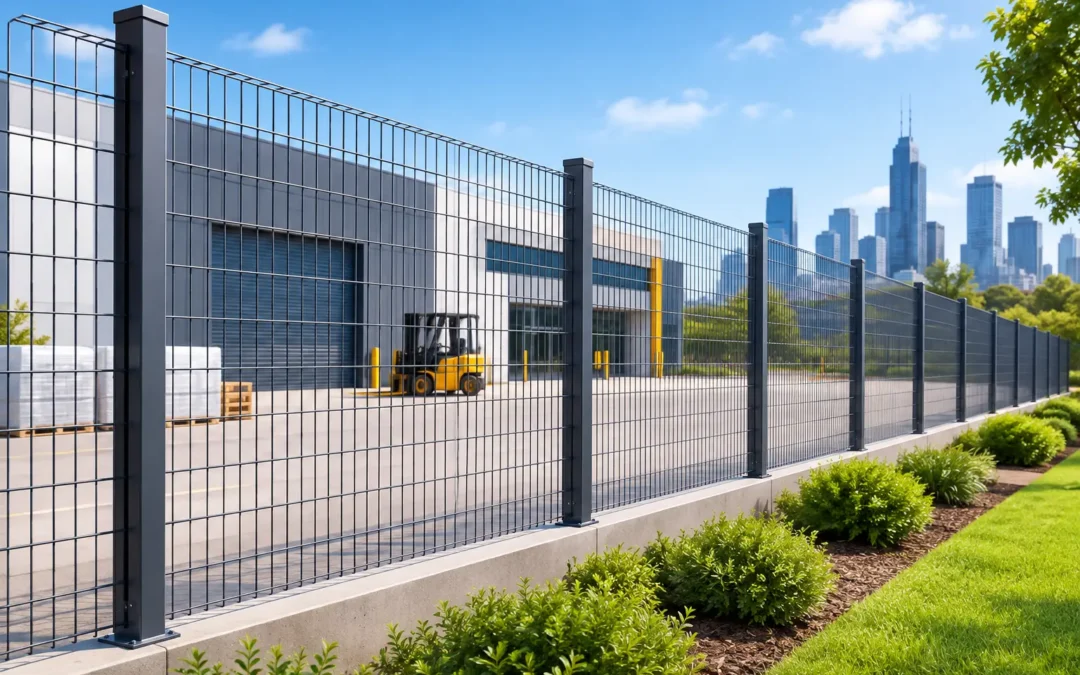
A boundary fence has to do more than mark a line on a plan. It may need to protect equipment, control access, keep students safely within a school ground, or give a commercial property a clean and credible street presence. Welded mesh fencing Melbourne property owners and facilities managers choose is often specified for exactly this balance of visibility, strength and dependable day-to-day performance.
Welded mesh is a practical perimeter system for sites where chain wire may be too open, timber may require too much upkeep, and solid panels may conceal sightlines. With the right panel, posts, fixings and gate arrangement, it provides a secure boundary that looks orderly from both sides.
Why welded mesh works on Melbourne sites
Welded mesh fencing is made from horizontal and vertical steel wires welded together at each intersection. The panels are then fixed to steel posts, creating a rigid fence line with consistent spacing and a neat, structured finish. It is commonly galvanised and may be powder coated where a particular colour or added surface protection is required.
The key advantage is that it is difficult to deform compared with lighter wire fencing. A properly specified welded mesh system resists casual climbing, cutting attempts and everyday impacts better than many basic boundary options. At the same time, the open mesh allows clear visibility across the perimeter. That can be valuable around car parks, loading areas, schools, sporting facilities and commercial yards, where passive surveillance matters.
For Melbourne conditions, material selection also matters. Exposure to rain, coastal air, irrigation, vehicle traffic and regular public use can affect how a fence performs over time. Galvanised steel and suitable coated finishes help protect the system, but the right choice depends on the location. A fence near the Mornington Peninsula, for example, may need a different corrosion-protection approach from one in a sheltered suburban yard.
Welded mesh fencing Melbourne projects commonly need
Welded mesh is not one single product. Panel height, wire diameter, aperture size, post type and gate design should be matched to the site rather than selected only by appearance.
For a residential side boundary or front garden, a lower welded mesh fence can provide definition without closing off the property. It suits homeowners who want a contemporary alternative to timber while retaining light and airflow. Where privacy is the priority, however, a solid Colorbond or timber-clad solution may be more suitable.
Commercial properties often use taller welded mesh around car parks, service areas, plant compounds and storage zones. These sites usually benefit from stronger posts, tamper-resistant fixings and gates designed around vehicle and pedestrian access. The fence is part of the wider access-control plan, not an afterthought.
Schools and community facilities need a careful balance between security, supervision and safety. Clear sightlines can assist staff supervision, while fence height, gate latches and any climbing risk need to be considered for the particular age group and location. Sporting clubs may use welded mesh in selected areas, although chain wire remains a common choice for tennis courts and larger ball-stop applications.
Industrial sites can require a more security-focused specification. Higher panels, narrower apertures, anti-climb profiles, controlled gates and compatible bollards may all be appropriate where equipment, stock or restricted work areas need protection. In these cases, the most effective outcome comes from considering the full perimeter, including the points where people and vehicles enter.
Security comes from the whole system
A strong panel alone does not make a secure fence. The posts, footings, clamps, rails, gate hardware and ground conditions all influence the finished result. A weak gate or poorly set post can compromise an otherwise well-specified boundary.
At quotation stage, a professional installer should assess access, soil conditions, existing structures, level changes and the intended use of the area. A fence running across a sloping site may need stepped panels or a raked arrangement. Gaps under the fence may need attention where animals, children or site security are concerns. Retaining walls, drainage and underground services can also change the installation method.
For higher-risk sites, it is worth discussing the following details before works begin:
- the required fence height and whether anti-climb performance is needed
- the location, width and swing or sliding operation of gates
- pedestrian access, latch type and any provision for electronic access control
- the level of corrosion protection needed for the site environment
- relevant Australian Standards, building requirements and project specifications.
There is no benefit in overcomplicating a straightforward boundary, but under-specifying a security fence can be costly later. The right system is the one that suits the actual risk, traffic and maintenance expectations of the property.
Appearance, visibility and maintenance
Welded mesh fencing has a clean, commercial appearance that works well across modern residential, education and business sites. Dark powder-coated finishes are popular because they sit quietly in the landscape and make the mesh less visually dominant. Lighter colours can suit some architectural schemes, but they tend to draw more attention to the fence line.
Visibility is one of welded mesh fencing’s strengths, yet it is also a trade-off. It allows staff, neighbours or security personnel to see through the boundary, but it does not provide screening. If privacy is required in one section of a site, it may be practical to combine fencing types rather than force one product to do every job. For example, welded mesh may suit a side or rear boundary, while solid fencing is used near outdoor living areas or bins.
Maintenance is generally straightforward. Periodic checks should focus on gate alignment, hinges, latches, post movement and any damaged coating. Keeping vegetation trimmed away from the panels helps avoid constant moisture and makes inspections easier. If a vehicle or machinery impact damages a section, early repair is preferable to allowing a loose panel or post to affect the rest of the fence line.
Installation quality affects long-term performance
A tidy installation starts with accurate set-out. Fence lines need to be checked against boundaries, plans and existing site conditions before holes are dug and posts are installed. This is particularly important around shared boundaries, services, driveways and gates.
Post spacing and footing depth should suit the selected system and ground conditions. Panels should sit consistently, gates should operate freely, and finishing details should be checked before the site is handed back. On active commercial, school or industrial sites, the work also needs to be organised around safe access and minimal disruption to daily operations.
Minster Fencing brings more than 40 years of fencing experience and four generations of family trade knowledge to projects across Melbourne Metro, the Mornington Peninsula and South Eastern Melbourne. The team can assess whether welded mesh is the right option, specify a system suited to the site and complete the installation with attention to relevant Australian Standards and practical site requirements.
When another fence type may be better
Welded mesh is highly versatile, but it is not automatically the best choice. Chain wire fencing can be more economical for large areas and remains well suited to tennis courts, sporting grounds and some industrial boundaries. Tubular fencing can provide a more decorative finish for frontages, pools and pedestrian-facing areas. Palisade fencing may be the stronger option for high-security commercial or industrial applications.
For properties needing complete visual screening, Colorbond, timber or a combined fencing design may make more sense. The best result often comes from matching each part of the site to its purpose rather than applying one fence style across every boundary.
A site-specific quote gives you the chance to resolve these questions before materials are ordered. Bring photos, plans, approximate measurements and a clear idea of how the space needs to work, then a fencing contractor can help turn that brief into a boundary that is secure, compliant and built to last.