
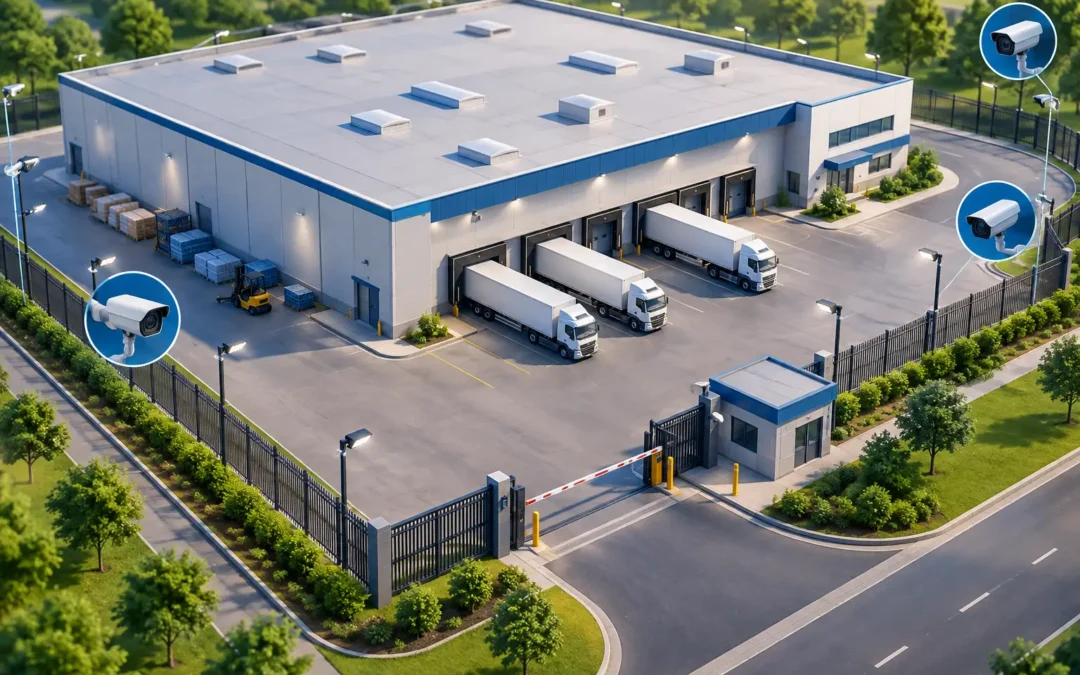
A warehouse perimeter upgrade is rarely just about replacing old fencing. It is an opportunity to control who enters the site, protect stock and equipment, separate vehicles from pedestrians, and give staff a clearer, safer boundary to work within. For warehouses across Melbourne and the Mornington Peninsula, the right solution must also stand up to daily traffic, local weather and the practical demands of loading areas.
The best results start with an honest assessment of how the site operates. A fence that suits a quiet storage yard may not suit a busy logistics facility with delivery drivers, forklifts, contractors and after-hours access. The aim is to create a perimeter that works every day, not simply one that looks secure at handover.
Start a warehouse perimeter upgrade with site risks
Walk the boundary and look beyond the existing fence line. Note where people, vehicles and deliveries enter the property; where visitors wait; where stock is stored outdoors; and where an intruder could access the site without being easily seen. Weak points are often found at side boundaries, rear laneways, ageing gates, corners concealed by storage, and gaps created by changes to site layout.
It is also worth reviewing the condition of the current installation. Leaning posts, loose chain wire, damaged mesh, corroded fittings and gates that drag on the ground can all compromise security. A repair may be suitable where the fence structure remains sound. If the footing, post line or gate system has reached the end of its serviceable life, a complete upgrade is generally better value than repeated call-outs and patch repairs.
Security should not come at the expense of operational access. Your perimeter plan needs to account for truck turning circles, emergency access, fire exits, pedestrian routes and room for gates to open safely. On constrained sites, the position and gate style can be as important as the fence selection.
Choose fencing for the level of protection required
There is no single best warehouse fence. The appropriate system depends on the property’s risk profile, visibility requirements, budget and the likely impact of damage or unauthorised entry.
Chain-link fencing remains a practical choice for large industrial boundaries, storage yards and service areas. It is cost-effective over longer runs, provides good visibility and can be specified in different heights and wire gauges. With suitable posts, rails, tensioning and security toppings where appropriate, chain wire can provide a dependable perimeter for many commercial sites.
Welded mesh fencing offers a more rigid, modern finish. Its panels are difficult to deform compared with lighter chain wire and suit sites where presentation matters alongside security. It is commonly used around warehouses, business parks, schools and commercial properties where a clean, consistent boundary is required.
Tubular fencing can suit frontages, office-entry areas and pedestrian-facing sections of a warehouse property. It provides a professional appearance while maintaining sightlines. For higher-security applications, palisade fencing may be considered where the site needs a more formidable physical barrier and climbing resistance.
The trade-off is simple: greater security usually means a higher initial investment and a more considered installation. The right choice is not necessarily the most imposing fence. It is the one that reflects the site’s genuine risks, prevents easy access and can be maintained without disrupting operations.
Height, visibility and security toppings
Fence height should be selected with the site layout and intended use in mind. A low fence may define a boundary, but it will not provide the same deterrent or containment as a taller system. Visibility is another factor. Open-style fencing allows supervisors, security staff and cameras to see through the perimeter, while solid screening can conceal activity on either side.
Security toppings, such as cranked extensions or other approved deterrent options, may be suitable for particular industrial locations. Their use should be considered carefully, particularly near public areas, neighbouring properties and accessible walkways. A professional contractor can help identify a sensible approach that considers safety, planning requirements and the expected level of risk.
Gates are the working part of the perimeter
A strong fence with a poorly designed gate leaves the site vulnerable. Warehouse gates are opened and closed repeatedly, often by people who are focused on deliveries, schedules and vehicle movements. They need to be easy to operate, correctly sized and built for the traffic they carry.
Sliding gates are often well suited to vehicle entries because they do not swing into driveways or loading areas. Swing gates can be a good option where there is adequate clear space and a simpler layout is preferred. Pedestrian gates should be placed where staff and visitors can enter without walking through truck zones or relying on an open vehicle gate.
Consider how access will be managed after hours. A lockable manual gate may suit a smaller yard with limited traffic. Larger facilities may require automation, intercoms, keypad access or integration with existing access-control arrangements. Automation adds convenience and better control, but it also needs appropriate safety features, regular servicing and a reliable plan for power failure or manual override.
Gate posts, hinges, tracks and latches deserve as much attention as the gate leaf itself. Heavy vehicles, uneven ground and regular use place significant pressure on these components. Specifying a gate to suit the actual opening width, vehicle type and frequency of use will reduce sagging, impact damage and avoidable downtime.
Use bollards to protect vulnerable assets
Not every security problem should be solved with fencing. Bollards are particularly effective around roller doors, electrical cabinets, gas meters, building corners, pedestrian entries and exposed equipment. They help prevent accidental vehicle strikes while making it harder for an unauthorised vehicle to force access.
Fixed bollards are suitable where access should never occur. Removable bollards provide flexibility for occasional deliveries, maintenance or emergency access. The correct spacing and installation depth matter. Bollards placed too far apart may allow a vehicle through, while poorly positioned bollards can create a hazard for drivers, pedestrians or forklift operators.
For many warehouses, a combination of perimeter fencing, controlled gates and targeted bollard protection gives better results than relying on one measure alone. It also allows the budget to be focused where the operational and security risk is highest.
Plan around drainage, ground conditions and services
Industrial fencing projects often encounter practical issues once work begins. Sloping ground, retaining requirements, concrete hardstand, underground services and poor drainage can all affect the installation method and final cost. These details should be identified before materials are ordered where possible.
Drainage is especially important along warehouse boundaries. Water pooling at gate tracks, post footings or low points can accelerate wear and affect access. On sloping blocks, stepped panels, raked fencing or retaining solutions may be needed to maintain a secure line without creating gaps below the fence.
Before excavation, underground services must be considered. Electrical cables, communications lines, stormwater and other infrastructure may run close to the boundary. A site-specific inspection helps prevent delays and supports a safer installation process.
Build compliance and safety into the scope
Commercial and industrial fencing needs more than a neat finish. Depending on the project, requirements may relate to Australian Standards, property boundaries, council conditions, pool or security requirements, gate safety, workplace safety and the needs of adjoining owners. The applicable requirements vary by site, so assumptions can be costly.
A properly scoped project will set out the fence type, height, post and footing arrangement, gate details, finishes, access requirements and any demolition or removal work. It should also establish how the installation team will work safely around active warehouse operations. This may include staging work around deliveries, maintaining emergency exits, separating work areas and leaving the site tidy at the end of each day.
For facilities managers, clear communication is as valuable as the product itself. Knowing when installers will be on site, which areas will be affected and when gates need to remain open helps keep the warehouse moving while work is completed.
Get a design that suits your site, not a standard package
A warehouse perimeter is a long-term investment in security, safety and site presentation. Off-the-shelf solutions can appear cheaper, but they may not account for traffic patterns, ground conditions, gate use or the vulnerable points that matter most. A tailored quote gives you the opportunity to compare options before committing to a system that may be difficult to alter later.
With more than 40 years of fencing experience, Minster Fencing can assess warehouse boundaries across Melbourne Metro and the Mornington Peninsula and recommend practical fencing, gate and bollard options for the site. A clear, obligation-free quote is the best place to start – particularly before small perimeter faults become larger security or safety issues.