
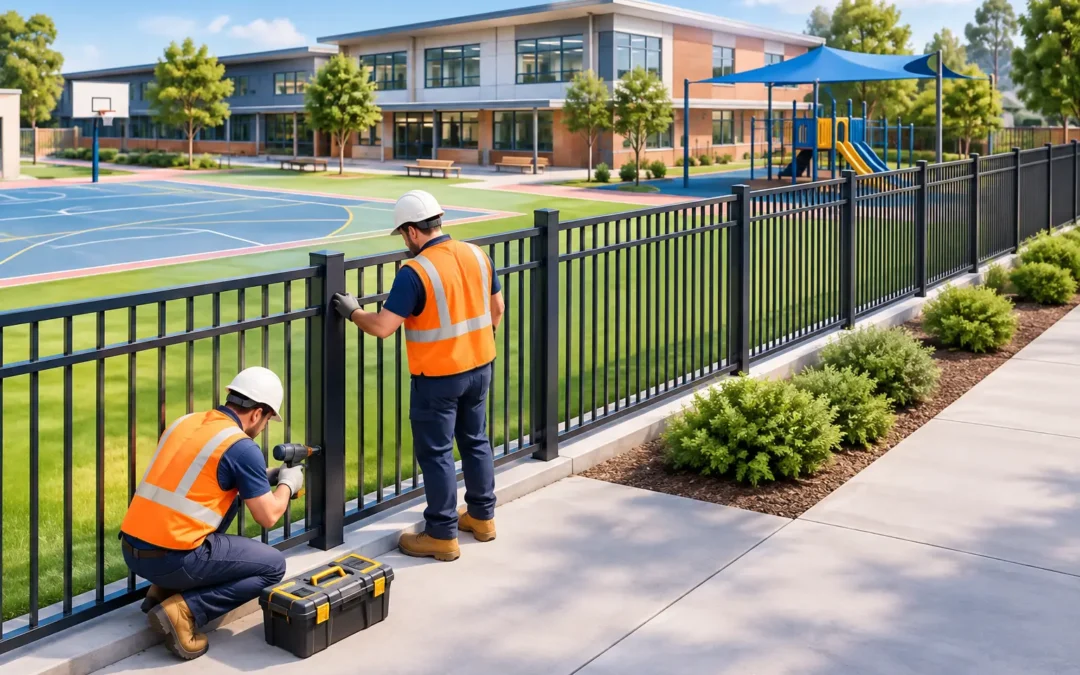
A school boundary has to do more than mark where the grounds end. It needs to guide visitors to the right entry point, protect students during the school day, stand up to daily use and support the way the campus operates after hours. That is why choosing school fencing contractors Melbourne facilities teams can rely on is a practical safety and asset-management decision, not simply a matter of selecting the lowest price.
Schools place unusual demands on fencing. There may be students arriving on foot, staff vehicles entering through a controlled gate, sporting facilities used on weekends and neighbouring homes close to the boundary. A suitable fencing system balances visibility, security, durability and appearance while meeting the needs of the particular site.
Start with the purpose of each fence line
The best school fencing projects begin with a clear understanding of what each section of fencing needs to achieve. A perimeter facing a busy road has different requirements from a fence around a bin enclosure, maintenance compound, early learning play area or outdoor court.
For a main school boundary, tubular steel or welded mesh fencing can provide a clean, professional finish with good visibility across and through the fence. This is useful where staff need passive surveillance of gates, paths and public-facing areas. Where a site requires a more assertive security measure, palisade fencing or heavier-duty mesh may be appropriate, particularly around plant, storage or service areas.
Chain-link fabric remains a practical choice for larger perimeters and sporting applications. It is economical across long runs, durable when correctly specified and well suited to tennis courts, ball courts and ovals. It can also be tailored with different heights, mesh sizes and gate arrangements. The right answer depends on the location, the expected level of impact and whether the fence is intended to contain balls, manage access or deter unauthorised entry.
A contractor should not apply one fencing type across an entire campus without considering these differences. A site walk-through should identify pedestrian approaches, vehicle movements, ground conditions, retaining needs, sightlines and the points most likely to experience wear or attempted access.
What school fencing contractors in Melbourne should assess
A reliable contractor will look beyond the lineal metres on a plan. School grounds often have uneven levels, mature trees, ageing structures, underground services and narrow access points that affect how a fence can be installed. These details influence post depths, footing requirements, panel layout, gate clearances and the work sequence.
They should also assess how the works can be completed with minimum disruption. On an active campus, this may mean staging installation during school holidays, working in contained sections or arranging deliveries away from peak drop-off and pick-up periods. Clean work areas, secure material storage and prompt removal of spoil and rubbish matter just as much as the finished fence.
Australian Standards compliance should form part of the discussion, particularly where fencing interfaces with public access, pools, play spaces, vehicle areas or specialised security requirements. Compliance is not a catch-all phrase. It needs to relate to the materials selected, installation method and the relevant application. Experienced contractors can explain what applies to the project and flag issues before installation begins.
Gates are where security succeeds or fails
A well-built perimeter is of limited value if the gates are difficult to operate, left unsecured or poorly matched to daily traffic. Schools commonly need a mix of pedestrian gates, double vehicle gates, sliding gates and service access gates. Each should be selected around its actual use rather than what is simplest to install.
A pedestrian gate near a reception area may need reliable self-closing hardware and controlled access. A maintenance entry may require a wider opening for grounds equipment or delivery vehicles. Sporting areas often need gates that can withstand regular use by clubs outside school hours without creating a weak point in the enclosure.
Gate location matters too. A gate that opens into a busy footpath, creates a blind spot or conflicts with vehicle movement can cause ongoing operational problems. The planning stage is the time to check swing direction, latch position, access control provisions and clearance around the opening. It is usually less costly to resolve these details before posts are set in concrete.
Choose materials for their working life, not just their appearance
A school fence is a long-term asset. It should be specified for repeated use, weather exposure and the occasional hard knock from sporting equipment, maintenance machinery or everyday campus activity. Finish and colour are relevant, but the strength of posts, rails, panels, fixings and footings are what determine how the fence performs over time.
Powder-coated tubular and welded mesh systems are popular where schools want a neat appearance with lower ongoing maintenance. They are available in colours that can sit comfortably alongside existing buildings and landscaping. For more utilitarian areas, galvanised chain wire can offer a durable, cost-effective solution. In coastal or exposed locations, material selection and protective finishes deserve extra attention because corrosion risk can be higher.
There are trade-offs. An open-style fence supports visibility but may offer less privacy from neighbouring properties. A solid or screen-style treatment can improve privacy and reduce visual clutter, but it can also limit natural surveillance and be more exposed to wind loading. A capable contractor will explain those trade-offs in plain English and help the school select a system that fits the site rather than overspecifying or cutting corners.
Plan for sport, access and shared community use
Many Melbourne schools operate beyond classroom hours. Courts, ovals and halls may be used by local clubs, families or community groups. Fencing for these spaces needs to cope with higher traffic and define responsibilities around access.
Tennis court and sporting-ground fencing requires careful attention to height, mesh, gate positions and ball containment. A fence that is too low or poorly tensioned quickly becomes a maintenance issue. On the other hand, a higher or heavier system may not be necessary for every court or training area. The sport played, surrounding property, available space and budget should guide the specification.
Bollards can also be valuable where vehicle control is needed near buildings, pedestrian zones or service entries. Fixed bollards suit permanent protection, while removable bollards can maintain emergency or maintenance access when required. Used with correctly placed gates and fencing, they help prevent vehicles entering areas intended for students and staff on foot.
Get the quote scope right before work begins
A clear, site-specific quote gives school leaders, builders and facilities managers confidence about what is included. It should identify the fencing type, approximate heights, gate arrangements, finishes, removal of existing fencing where required and any known site constraints. If excavation, retaining work, post-hole digging or service-location requirements are involved, these should be discussed upfront.
Price is naturally part of the decision, but it should be compared against scope, materials and installation quality. A low figure can become costly if it excludes demolition, disposal, difficult access, suitable footings or gate hardware that the site genuinely needs. Ask how the contractor will manage changes found once work starts, such as rock, old concrete footings or an unexpected level difference.
Communication is equally important. Schools need a contractor who will confirm timing, coordinate site access, keep work areas orderly and respond when details need to change. For larger projects, staged works can keep essential pathways and campus operations open while the perimeter is upgraded.
With more than 40 years of operational experience and four generations in the trade, Minster Fencing approaches education projects as working sites with real safety, access and scheduling requirements. The focus is on supplying and installing fencing that suits the application, complies with relevant Australian Standards and is completed with dependable workmanship.
A practical next step for your school site
Before requesting prices, walk the boundary with a simple list of concerns: where students enter and leave, which gates cause problems, where privacy is needed, which areas need stronger security and whether sporting or community use changes the requirements. Photos and a current site plan can also help make the first discussion more productive.
A direct site inspection and obligation-free quote will turn those observations into a workable fencing plan, with the right materials, gate layout and installation sequence for your school grounds.