
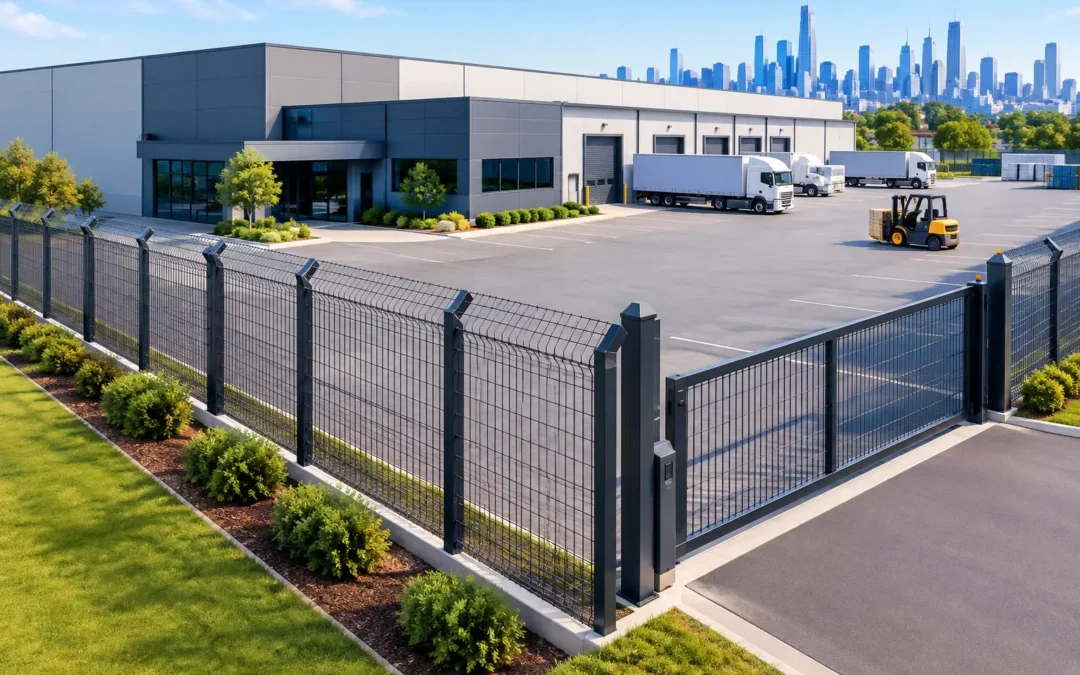
A perimeter fence has a hard job on an industrial site. It needs to define the boundary, discourage unauthorised access, handle daily vehicle movements and still stand up to Melbourne weather, site activity and years of use. The right industrial perimeter fencing Melbourne solution is not simply the tallest or heaviest option. It is the system that suits the site’s security risks, operating requirements, layout and budget.
For warehouses, factories, storage yards, construction compounds, transport depots and utility sites, fencing should be planned as part of the wider access-control system. That means looking beyond the fence line to gates, pedestrian access, visibility, ground conditions and future use of the property.
Start with how the site operates
Before selecting a fence type, consider what happens at the boundary every day. A quiet storage facility with limited public access has different needs from a busy depot where trucks enter from early morning through to late afternoon. Likewise, a site storing high-value stock may need a more difficult-to-climb perimeter than a business simply looking to secure equipment after hours.
The questions are practical. Where are people most likely to approach the site? Are there blind corners or rear boundaries adjoining public land? Does the fence need to stop trespass, contain materials, guide visitors, or all of these at once? Will forklifts, delivery vehicles or heavy plant regularly pass through the gates?
A good site assessment also identifies changes in level, existing retaining walls, drainage paths, underground services and access restrictions for installation equipment. These details affect post depths, fence heights, gate design and the long-term performance of the completed work. Addressing them early avoids the common problem of a fence that looks suitable on a plan but causes issues once work begins.
Industrial perimeter fencing Melbourne businesses can specify with confidence
Industrial fencing is not a one-material decision. Each system has strengths, and the best choice depends on the balance between security, visibility, appearance and cost.
Chain-link fencing for practical site boundaries
Chain-link fencing remains a reliable choice for large perimeters, yards, sporting facilities and temporary or semi-permanent work areas. It provides clear visibility through the fence, can cover long runs efficiently and is available in different wire gauges, mesh sizes and heights.
For many industrial properties, galvanised chain-link fabric is a sensible, hard-working option. Black or green PVC-coated finishes can be chosen where appearance matters or where the fence needs to sit more quietly alongside landscaping. Security can be increased with height, top treatments and properly designed gates, but chain-link may not be the preferred option where a site requires a more formal façade or stronger anti-climb performance.
Welded mesh for visibility and higher security
Welded mesh panels are commonly selected for industrial and commercial locations that need a cleaner, more rigid perimeter. The close wire configuration makes climbing more difficult than many conventional fence types while retaining visibility for staff, CCTV and passive surveillance.
This makes welded mesh well suited to warehouses, schools, utility areas, service yards and sites with public-facing boundaries. Panel systems can also create a neat, consistent finish along long frontages. The trade-off is that site falls and uneven ground need careful planning, as rigid panels offer less flexibility than chain-link fabric.
Palisade fencing for demanding security applications
Where deterrence is a priority, palisade fencing offers a substantial, purpose-built option. Its vertical steel pales and secure rail arrangement create an imposing boundary without fully blocking sightlines across the property.
Palisade fencing is often considered for high-risk storage areas, infrastructure sites, industrial compounds and locations where perimeter breaches would cause serious disruption. It generally requires a greater upfront investment, but that can be justified when security requirements are higher and the fence is expected to perform over the long term.
Tubular and panel fencing for frontage and controlled access
Tubular steel fencing is a useful choice where an industrial site meets a public street, office area or customer entrance. It provides a more finished appearance while maintaining an open feel. Combined with matching pedestrian and vehicle gates, it can create a clear, professional entry point without sacrificing boundary control.
Panel fencing may also suit service zones, bin areas and internal separation where privacy or screening is needed. In many cases, one site benefits from more than one fencing system – for example, tubular fencing to the front, chain-link fencing along side boundaries and welded mesh around a sensitive storage area.
Gates are part of the security plan
A secure fence can be undermined by an unsuitable gate. Vehicle entry points are usually the busiest and most vulnerable sections of an industrial perimeter, so gate type, width, operation and hardware should be determined around actual site traffic.
Sliding gates are often a strong option where there is room to run the gate along the fence line. They can suit wide vehicle openings and are commonly paired with automation, access controls and safety features. Swing gates can work well where space is limited along the boundary, although clearance requirements and wind exposure must be considered. Pedestrian gates should provide controlled staff access without creating an easy point of entry for visitors.
For sites with regular deliveries, allow enough opening width for the largest vehicles likely to use the entrance, including trucks turning from the street. It is also worth planning for after-hours operation, emergency access and the location of intercoms, keypads or card readers before installation starts.
Don’t overlook bollards and internal protection
Perimeter protection does not stop at the fence line. Fixed or removable bollards can protect gates, buildings, loading areas, services and pedestrian zones from vehicle impact. They are particularly useful near automated gate motors, card readers, roller doors and corners where forklifts or delivery vehicles operate.
Internal fencing can also improve control across a larger site. Storage cages, mesh partitions and controlled-access compounds can separate valuable stock, hazardous materials or plant from general work areas. This approach is often more cost-effective than trying to make every metre of the external boundary perform at the highest possible security level.
Compliance, ground conditions and workmanship matter
Industrial fencing must be suited to the project and installed in line with relevant Australian Standards, local requirements and site-specific conditions. The exact obligations vary depending on the property, fence location, height, use and whether the work interfaces with public areas, pools, schools, sporting grounds or regulated infrastructure.
Experienced contractors assess these factors before finalising the system. They also consider post footing size, soil conditions, wind loads, fence tension, drainage and how the fence will meet existing structures. A properly tensioned chain-link fence, square gate frame and correctly set posts may not be the most visible parts of the job, but they are what keep the fence operating as intended.
Installation quality affects maintenance as well. Poorly aligned gates, inadequate clearances, loose mesh or posts installed without sufficient support can lead to ongoing repairs and security gaps. A tidy installation should leave the boundary functional, safe and ready for normal site operations, rather than creating cleanup or access problems for the customer.
Plan for the next five years, not just opening day
Industrial properties change. A yard may gain additional storage, a tenant may introduce more vehicle traffic, or a business may need to automate access as staffing arrangements change. Designing some flexibility into the perimeter can prevent unnecessary replacement work later.
Consider where future gates may be required, whether power can be brought to an entry point and whether the fence line allows for expansion. It is also sensible to retain access for mowing, maintenance, drainage and repairs along the boundary. The cheapest quote can become expensive if it leaves no room for the way the site will operate next year.
With more than 40 years of operational experience, Minster Fencing approaches industrial work as a complete boundary and access-control project, not a line of posts and mesh. A site-specific quote allows the right fencing, gates and protective elements to be matched to the conditions on the ground.
If you are planning a new industrial boundary or replacing a tired perimeter, start with a clear walk-through of the site. It gives you a practical basis for choosing a fence that protects the property, supports daily operations and continues to do its job long after installation is complete.