
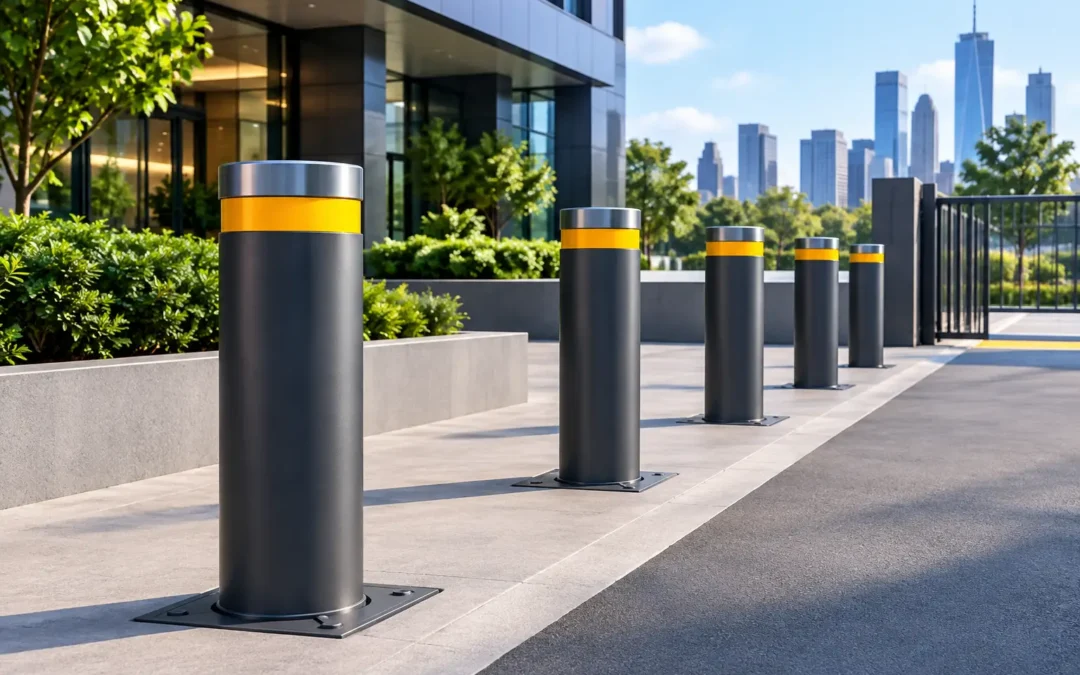
A vehicle only needs a few metres of clear space to cause serious damage. For a shopfront, school entrance, warehouse roller door or apartment car park, fixed security bollards Melbourne property owners install can create a clear physical barrier between vehicle traffic and the people, buildings and equipment that need protection.
Unlike removable bollards or gates, fixed bollards stay in place. That makes them a practical choice where access should never be available, such as along a building frontage, beside pedestrian paths, in front of essential services or around vulnerable site assets. The best result is not simply a line of steel posts. It is a properly planned installation that protects the right area without making the site harder to use.
Where Fixed Security Bollards Make Sense
Fixed bollards are commonly used on commercial, industrial, education and residential sites where a permanent vehicle barrier is required. They can deter opportunistic ram-raids, prevent accidental vehicle strikes and help separate vehicles from pedestrian zones. Their presence also makes site boundaries and restricted areas immediately obvious.
For retail premises, bollards are often installed in front of glazing, entry doors, loading areas and outdoor plant. At warehouses and factories, they can protect roller doors, columns, electrical cabinets, gas meters, racking ends and pedestrian exits from forklifts, utes and delivery vehicles. Schools, sporting clubs and community facilities may use them to define safe walkways or stop vehicles entering gathering areas.
On strata and residential projects, a fixed bollard can protect a garage entrance, shared driveway edge, letterbox bank or building corner where drivers have limited visibility. The application matters because it determines the spacing, position, height and footing required. A bollard that stops a car clipping a wall is not necessarily designed for the same impact risk as one protecting a high-traffic commercial frontage.
Fixed Security Bollards Melbourne Sites Can Rely On
A fixed bollard is only as effective as its installation. The visible section above ground is important, but the below-ground footing is where much of the work is done. Bollards are generally set into excavated holes and secured with concrete, with footing depth and diameter selected to suit the bollard type, ground conditions and expected site use.
On a straightforward residential job, access for excavation and concrete placement may be easy. A busy commercial site can be more involved. There may be underground services, existing slabs, drainage, landscaping, footpaths, vehicle movements or trading hours to consider before digging begins. Locating services and assessing the ground conditions before installation protects the project from avoidable delays and damage.
Material choice also affects long-term performance. Galvanised steel is a common option for weather resistance, while powder-coated finishes can be selected to suit a building or surrounding fencing. High-visibility finishes may be appropriate near traffic routes. In some settings, a simple galvanised finish is the practical choice. In others, matching the bollards to tubular fencing, gates or a site colour scheme gives the frontage a more considered appearance.
There is a trade-off between security and visual impact. Larger, heavier bollards generally provide a more substantial barrier, but they can look imposing if placed too close together in a residential or customer-facing setting. Smaller bollards may suit low-speed traffic control, but should not be assumed to offer high-impact protection. The right specification should reflect the actual risk, not just the look of the product.
Spacing Is About More Than Appearance
Bollard spacing determines whether a vehicle can pass through the protected line. If posts are set too far apart, a small vehicle may still gain access. If they are too close together, pedestrian access, prams, wheelchairs, trolleys and maintenance equipment may be affected.
The layout should account for the particular users of the site. A school entrance needs different pedestrian clearance from the edge of an industrial loading zone. A retail frontage may need space for deliveries, cleaning and customer movement. Where accessibility requirements apply, the design should be considered alongside relevant Australian Standards and the overall site plan.
It is also worth looking beyond the immediate point of impact. A bollard line placed in front of a doorway may protect the door, but it must not obstruct emergency egress or create a pinch point on the path. Experienced planning considers how people, vehicles and equipment move through the area every day.
Choosing Fixed, Removable or Other Access Control
Fixed bollards are the right choice where vehicle access is never needed. Their permanent nature provides certainty and avoids the practical issues that can come with keys, padlocks, storage and reinstatement of removable posts.
However, fixed is not always the answer. If a service vehicle, emergency crew or grounds maintenance team needs occasional access, removable bollards may be more suitable. They can secure an opening most of the time while allowing authorised entry when required. Gates may be the better option for wider driveways or areas requiring regular controlled access.
Many sites benefit from a combination. For example, fixed bollards can protect building corners and pedestrian areas, while removable bollards secure a maintenance access point. The important step is to identify every legitimate access requirement before concrete is poured. Moving a bollard later is possible, but it is far more disruptive and costly than getting the layout right at the start.
What a Professional Installation Should Cover
A reliable bollard project starts with a site-specific assessment, not a one-size-fits-all product recommendation. The installer should understand what is being protected, what vehicles use the site, where underground services may be located and whether the bollards need to coordinate with existing fencing, gates or paving.
The work should then be planned around safe access and a tidy finish. That includes marking positions accurately, excavating to the required depth, setting posts plumb, placing concrete correctly and allowing for appropriate curing. On finished sites, care is needed to minimise disturbance to paving, landscaping and nearby surfaces.
For commercial and institutional sites, programme coordination is equally important. Installation may need to occur outside busy operating periods, with work zones managed around staff, students, customers or deliveries. Clear communication about access, timing and any temporary restrictions helps keep the job running smoothly.
Minster Fencing brings more than 40 years of fencing experience and four generations of family trade knowledge to security and access-control projects across Melbourne Metro and the Mornington Peninsula. Materials and installation work are selected and completed with relevant Australian Standards in mind, with practical advice based on the conditions of the individual site.
Planning Before You Request a Quote
A good quote is easier to prepare when the purpose of the bollards is clear. It helps to note the number of locations, the area to be protected, the type of vehicles present and whether the installation is into soil, concrete or near existing paving. Photos and a simple site plan can also help identify access constraints early.
If you manage a commercial, strata or school site, consider whether there are future works that could affect the layout. Planned landscaping, a new gate, altered traffic flow or a building extension may change where protection is needed. Allowing for those decisions now can prevent a security solution from becoming an obstacle later.
A fixed bollard installation should feel straightforward once it is complete: clear pedestrian space, protected assets and a barrier that does its job without demanding attention. A site visit and obligation-free quote can turn that outcome into a practical, properly positioned plan.