
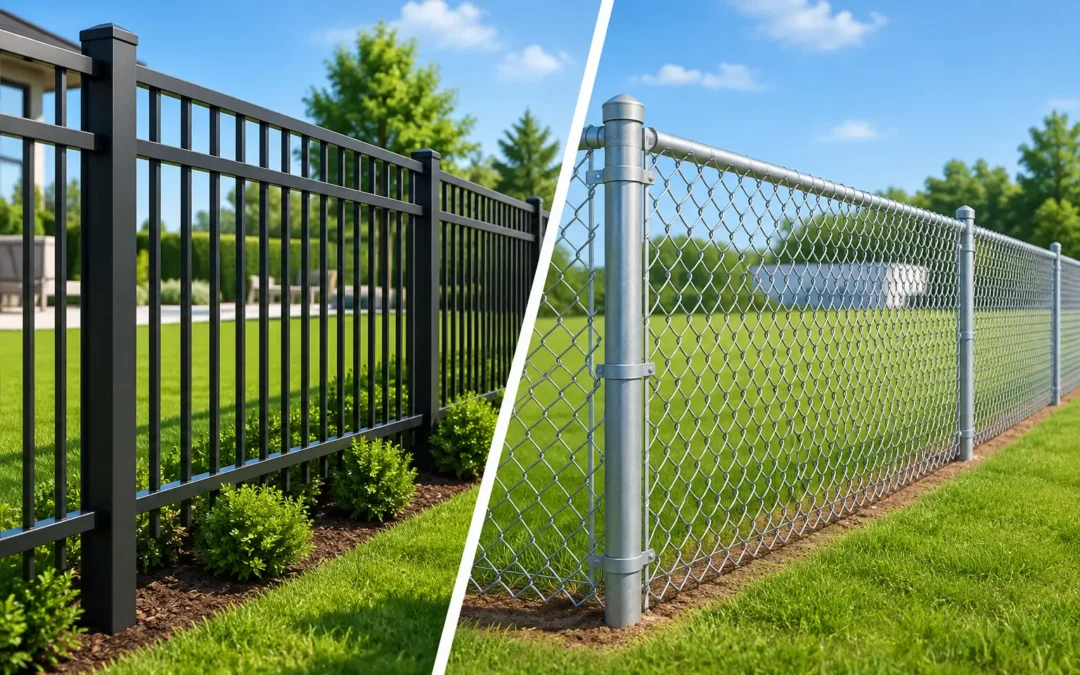
A front boundary fence needs to look right from the street. A school perimeter needs to manage access without creating blind spots. A warehouse yard may simply need a durable, economical line around a large site. That is why tubular versus chain link fencing is not a one-size-fits-all choice. Both systems are proven performers, but they solve different problems.
For property owners and project managers across Melbourne and the Mornington Peninsula, the better option comes down to purpose, risk level, budget, visibility and the way the fence must work with gates, access points and the surrounding site.
Tubular versus chain link fencing at a glance
Tubular fencing is built from vertical steel pickets fixed to horizontal rails and supported by posts. It creates a clean, open fence line with a more formal finish than most wire fencing. It is commonly selected for front boundaries, pools, schools, commercial premises, strata properties and pedestrian-facing areas where appearance matters alongside security.
Chain link fencing, also called chain wire fencing, uses woven wire fabric tensioned between posts. It is a practical choice for large perimeters, sports courts, industrial yards, storage areas and sites where visibility and coverage are more important than a decorative finish. It can be specified in different heights, wire gauges and configurations to suit the site.
Neither is automatically better. A low tubular fence may suit a townhouse frontage but be unsuitable for an industrial storage yard. Standard chain link may be ideal around a tennis court yet not deliver the presentation a premium commercial entry requires.
Appearance and street appeal
Tubular fencing usually has the stronger visual appeal. Its straight lines, powder-coated finish and range of colours give it a neat, permanent appearance. It can be matched with sliding gates, swing gates, masonry piers or landscaping to create a coordinated frontage. For residential properties, medical facilities, schools and commercial offices, this can make a real difference to the overall presentation of the site.
The open spacing between pickets also allows views in and out. That suits properties where passive surveillance is useful, such as a front boundary, visitor car park or school entry. The fence defines the boundary without making the property feel closed in.
Chain link fencing has a more functional appearance. Galvanised fabric is familiar around sporting grounds and industrial sites, while black or green PVC-coated options can soften its look in parks, gardens and less formal commercial settings. It rarely offers the same architectural finish as tubular fencing, but it does not need to. On a long side boundary or rear compound, a practical fence that is correctly tensioned and neatly installed can be the sensible choice.
Security depends on the specification
Fence type is only part of the security decision. Height, post spacing, footing depth, gate hardware, ground conditions and potential climbing points all affect the finished result.
Tubular fencing can provide a strong physical and visual boundary. Security-style designs may include taller panels, tighter picket spacing and pointed or cranked picket tops where appropriate for the application. It is well suited to sites that need controlled pedestrian access and a professional first impression, including schools, strata complexes and commercial buildings.
Chain link fencing is highly adaptable for perimeter security. Taller chain wire systems can cover substantial lengths efficiently, and additions such as top rails, bottom rails, barbed wire or other security treatments may be considered where the site and relevant requirements allow. It is often selected for industrial yards, utility areas and compounds because it provides a clear view across the boundary and makes unauthorised access more visible.
A fence should never be specified on height alone. For example, if a site contains valuable equipment close to the boundary, the gate, locking arrangement and access-control plan may matter as much as the fence fabric or panels. On a school or public-facing site, the design must also consider safety, supervision and the possibility of people climbing or congregating around the fence.
Cost and coverage across larger sites
Chain link fencing is often the more cost-effective option for long runs. The materials and installation method make it well suited to large, straightforward boundaries, particularly where the terrain is reasonably consistent and the fence does not need a high-end visual finish. For sports grounds, vacant land, rural-style boundaries and industrial perimeters, this can deliver excellent value.
Tubular fencing generally has a higher material cost because it uses fabricated panels or pickets, rails and a finished coating system. Complex layouts, stepped sections, custom colours and integrated gates can also add to the project cost. In return, it can reduce the need for additional façade treatments and help lift the appearance of the property from day one.
The lowest upfront figure is not always the best value. A residential owner may spend more on tubular fencing at the front while using chain link along a concealed side or rear boundary. A commercial site may use tubular fencing at its public entry and chain wire around service yards. Combining systems is often a practical way to direct the budget where it has the greatest impact.
Durability and maintenance in Melbourne conditions
Both fencing types can provide long service when the materials are suitable for the location and the installation is carried out properly. Galvanised steel helps protect against corrosion, while powder coating on tubular fencing provides an additional finished layer. Coastal and bayside properties, including parts of the Mornington Peninsula, need closer attention to material selection because salt-laden air can accelerate corrosion.
Tubular fencing is generally easy to maintain. Periodic washing removes dirt, salt and garden residue, while scratches or chips should be addressed before they become larger coating failures. Check that gates close properly and that hinges, latches and self-closing mechanisms are operating as intended.
Chain link fencing needs inspection for loose ties, damaged fabric, sagging sections and disturbed footings. A correctly tensioned chain wire fence should remain stable, but impact from vehicles, fallen branches or regular sporting use can require repairs over time. PVC-coated fabric can be a worthwhile consideration where appearance and added surface protection are priorities.
Maintenance is also influenced by the surrounding environment. Irrigation overspray, climbing plants, soil build-up against the base of the fence and stored materials leaning on panels can all shorten the life of any fencing system.
Gates, access and daily use
A fence is only as useful as the access it provides. Tubular fencing works particularly well with pedestrian gates, automated sliding gates and swing gates that form part of a visible entry point. The consistent panel style makes it easier to create a tidy, integrated result.
Chain link fencing can accommodate pedestrian and vehicle gates effectively, especially on wide access points to yards, sports facilities and compounds. It is a practical option where gates need to match an existing chain wire perimeter or where the priority is reliable vehicle access rather than a statement entrance.
Before choosing either system, consider who uses the site every day. A family may need child-safe gate arrangements. A facilities manager may need controlled access for contractors. A sporting club may need wide openings for maintenance equipment. These operating details should be settled before installation rather than treated as an afterthought.
Compliance and site-specific design
Pool barriers, school fencing, commercial sites and security-sensitive premises can have specific requirements that affect fence height, gaps, gate operation and climbable elements. Boundary fencing may also be subject to council requirements, planning conditions, body corporate rules or agreements with neighbouring owners.
A professional site assessment helps identify these issues early. Ground levels, retaining walls, underground services, drainage, existing structures and vehicle movements can change the recommended fence design. Materials and installation should be selected to meet relevant Australian Standards and the needs of the particular application.
With more than 40 years of fencing experience, Minster Fencing can assess the practical demands of a site and provide an obligation-free quote based on the fence, gates and access arrangements actually required.
Which fence is right for your project?
Choose tubular fencing when presentation, a clean street-facing finish and controlled pedestrian access are central to the brief. It is especially suited to residential frontages, schools, strata developments, commercial entrances and areas where the fence will be seen every day.
Choose chain link fencing when you need efficient coverage over a large area, clear visibility through the perimeter and a practical solution for sporting, industrial or utility applications. It is a proven choice for tennis courts, compounds, yards and long boundary runs.
The most effective result may be both: tubular fencing where visitors arrive and chain wire where the site needs durable, economical perimeter coverage. A site-specific quote gives you the chance to weigh those options against your budget, security needs and the way the property will be used for years to come.