
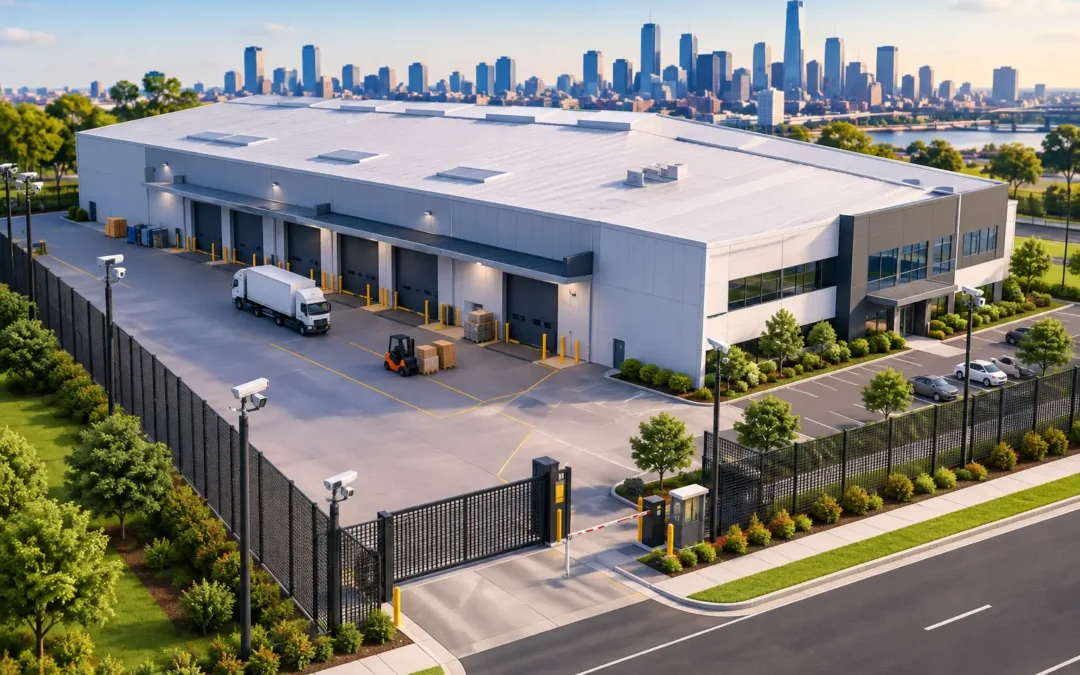
A damaged rear fence, an unsecured pedestrian gate and vehicles entering through the same access point can create far more than an untidy boundary. This warehouse perimeter upgrade case study looks at a practical Melbourne-style industrial site upgrade: how a tired perimeter was assessed, how the right fencing and gate arrangement was selected, and why staged works made sense for a busy operation.
This is a representative example based on the types of warehouse perimeter projects our team is asked to quote. Every site has different access requirements, ground conditions and compliance responsibilities, so the final scope should always be confirmed through a site inspection.
The site problem: a boundary that no longer matched the operation
The warehouse occupied a corner industrial allotment with street frontage, a shared side boundary and a rear service area. The existing chain-link fence had been patched several times over the years. Some posts had moved, sections of fabric were loose near the bottom rail, and the vehicle gate did not close reliably.
None of these issues appeared dramatic in isolation. Together, they left gaps in site control. Staff, delivery drivers, contractors and visitors used the same entry point. The rear area, where pallets and equipment were sometimes stored, could not be easily monitored from the office. After-hours access relied on a gate that needed regular attention just to latch.
The facilities manager did not want to shut the warehouse for a full perimeter replacement. They needed a clear plan that improved security, separated people from moving vehicles where practical, and kept deliveries operating during the works.
Site inspection before specifying the fence
A perimeter upgrade starts with more than choosing a fence style. At the inspection stage, the key questions were about how the site worked day to day: where trucks queued, which gates were actually used, whether forklifts approached the boundary, where staff walked, and what needed to remain accessible during installation.
The team also needed to check fence-line levels, existing concrete and services, drainage paths, neighbouring structures and the condition of the current footings. A fence is only as dependable as the posts and foundations supporting it. Installing new material into a poorly planned line, or assuming every old footing can be reused, often leads to avoidable delays and disappointing results.
For industrial sites, the desired level of security matters as much as the material itself. Chain-link fabric can be an economical, practical solution for a large boundary, particularly when visibility and airflow are useful. Tubular fencing gives a more defined presentation along customer-facing areas. Welded mesh and palisade fencing can suit sites needing a more difficult-to-climb perimeter. The appropriate choice depends on the risk, budget, appearance and operating conditions.
The recommended warehouse perimeter upgrade
The proposed scope divided the property into zones rather than applying one product across every boundary. That approach gave the warehouse stronger protection where it was needed without spending heavily on fencing features that offered little benefit in lower-risk areas.
Street frontage and pedestrian access
The street-facing section was upgraded with tubular fencing and a lockable pedestrian gate. This provided a neat, professional boundary visible to staff, visitors and neighbouring businesses. More importantly, the pedestrian entry was positioned separately from the vehicle gate, helping create a clearer route for people arriving on foot.
Gate hardware was treated as part of the security system, not an afterthought. The gate needed reliable hinges, a suitable latch arrangement and allowance for the access control method chosen by the client. A well-built fence with a weak or misaligned gate does not solve the access problem.
Main vehicle entry
The existing vehicle gate was removed and replaced with a properly sized sliding gate arrangement suited to delivery and service vehicles. Before finalising the opening, the site team considered turning movements, truck length, visibility at entry and the space available for the gate to travel when open.
A sliding gate is not automatically the right answer for every warehouse. Swing gates can work well where there is sufficient clear space and lower vehicle traffic. Sliding systems are often preferred where access is frequent or where gate leaves would obstruct internal traffic areas. The best option comes back to the layout and how the site operates at peak times.
Rear service boundary
The rear boundary received new chain-link fencing with galvanised components and a strengthened post layout. The aim was to contain the service area, retain visibility and remove the weak points created by piecemeal repairs.
Where chain-link fencing is selected, the quality of the installation makes a real difference. Correct post spacing, tensioned fabric, suitable rails and properly installed footings help the fence withstand regular use and Melbourne weather. In areas exposed to vehicle activity, bollards may also be worth considering to protect vulnerable posts, gate equipment or building services from accidental impact.
Keeping the warehouse open during installation
The project was planned in stages so the warehouse could continue trading. One section of the boundary was removed and replaced at a time, with temporary access arrangements agreed before work began. The main vehicle entry was scheduled around quieter delivery periods, reducing disruption to freight movements.
This is where communication matters. A fencing contractor needs to coordinate with the person managing the site, not simply arrive and begin removing panels. Delivery windows, contractor parking, emergency access, staff routes and equipment storage all need to be discussed beforehand.
For this type of work, a tidy site is also a safety requirement. Removed fencing, excavated spoil and new materials must be managed so they do not create trip hazards or block access ways. At completion of each stage, the temporary and permanent boundary needs to be secure before the team leaves site.
Compliance and practical details that should not be missed
A warehouse perimeter may have obligations beyond security. Depending on the property and proposed works, the owner or tenant may need to consider lease conditions, planning controls, building requirements, fire access, emergency egress and any body corporate or neighbouring-boundary agreements.
The fence itself should be specified and installed with the relevant Australian Standards in mind. That does not mean every warehouse requires the same height, infill or gate configuration. It means the system should be matched to its purpose, materials should be fit for use, and installation should be carried out professionally.
It is also wise to think ahead. If the client expects to add cameras, keypad access, intercoms or automated gate equipment later, conduits, mounting positions and clearances can be considered during the fencing works. Planning for future services early is generally easier than altering a completed perimeter after the fact.
What changed after the upgrade
The result was not simply a newer fence. The property had a clearer distinction between pedestrian and vehicle access, a dependable vehicle entrance and a rear boundary that better protected stored goods and service areas. The front of the site also presented more professionally to visitors and prospective tenants.
Just as importantly, the facilities manager had a perimeter that was easier to maintain. Replacing repeated patches with properly installed sections reduced the cycle of minor repairs that had been consuming time and budget. Staff could identify whether gates were closed at the end of the day, rather than relying on an ageing latch and a visual guess.
A perimeter upgrade will not remove every security risk. It should sit alongside sensible site procedures, lighting, access control and staff awareness. But it provides the physical structure those measures rely on.
When is it time to review your warehouse boundary?
A review is worthwhile when gates drag or fail to latch, fencing has been repeatedly repaired, stock is stored close to an exposed boundary, or site traffic has changed since the original fence was installed. It is also sensible before a warehouse expansion, tenancy change or major access-control upgrade.
Minster Fencing can assess warehouse fencing, gates, bollards and access points across Melbourne Metro and the Mornington Peninsula, then provide an obligation-free, site-specific quote. A practical site inspection is the best place to start, because the right perimeter is one that protects the property without getting in the way of the work happening inside it.