
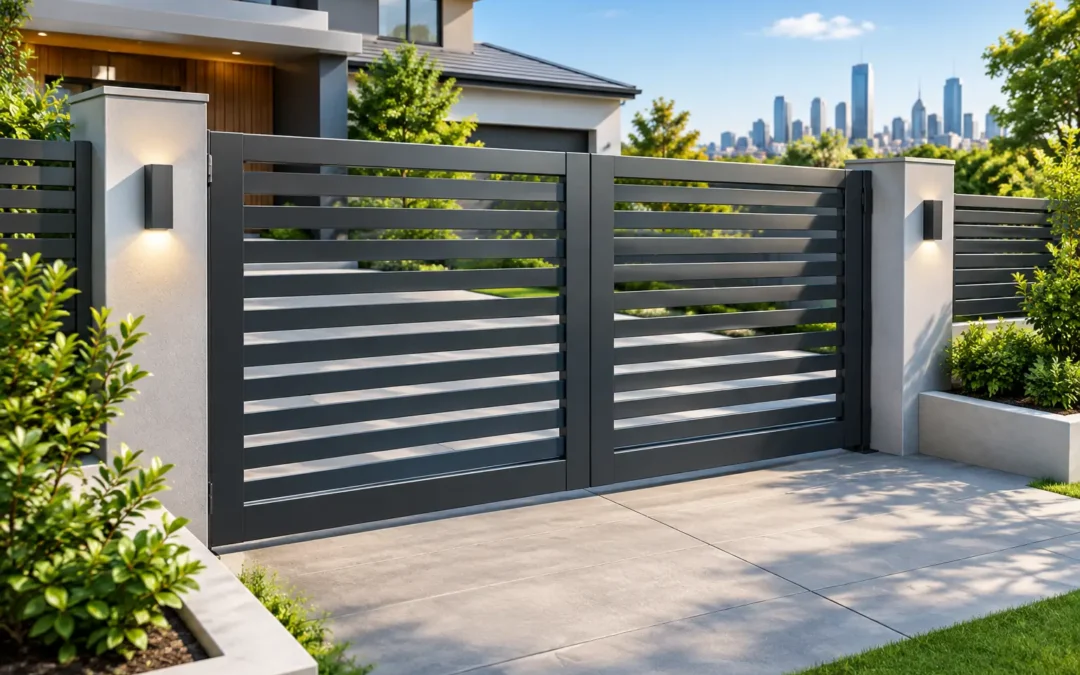
A gate is often the hardest-working part of a fence line. It needs to open reliably in Melbourne’s changing weather, control access without creating a daily frustration, and look right alongside the property it protects. Custom steel gates Melbourne property owners, builders and facilities teams choose should be designed around the site first – not selected from a standard size and made to fit later.
For a front driveway, that may mean allowing for a sloping approach, turning room and a family vehicle. For a school, warehouse or sporting reserve, it may mean managing pedestrian flow, service access and security across a much wider opening. The right gate is a practical part of the site, built to suit how people, vehicles and equipment move through it.
Why custom steel gates make sense in Melbourne
Steel gives a gate the strength needed for frequent use, wide spans and demanding security applications. It can also be fabricated to suit a wide range of fencing systems, from clean-lined tubular fencing at a home or school to chain wire, welded mesh or palisade fencing around commercial and industrial sites.
The benefit of custom fabrication is not simply appearance. A made-to-measure gate lets the installer account for existing levels, post locations, drainage, footpath clearances, access widths and the gate’s intended use. These details affect whether a gate swings cleanly, latches securely and continues to operate as intended over time.
Standard off-the-shelf gates can be a sensible option for straightforward openings. However, they often require compromises where a site has an uneven driveway, a non-standard width, retaining walls, existing structures or specific access requirements. A custom steel gate gives the project team more control over the finished result.
Start with how the gate will be used
Before selecting a style, establish who will use the gate and how often. A pedestrian gate beside a residential driveway has different requirements from a sliding vehicle gate at an industrial yard. The opening method, hardware, frame construction and locking arrangement all need to match the job.
A swing gate is often a good choice where there is clear space inside the property boundary and the opening is relatively modest. Single swing gates suit pedestrian access and narrower driveways, while double gates can provide a wider vehicle entrance. They are simple in principle, but the ground levels and swing path must be checked carefully. A gate should not drag across a driveway or open towards a public footpath.
Sliding gates are commonly used where driveway space is limited or where wide access is required. They can be manually operated or automated, depending on the site and level of use. A sliding gate needs enough room along the fence line for the gate to travel when open. Cantilever designs may suit sites where a ground track is impractical, although they require a longer gate structure and suitable supporting foundations.
For commercial premises, schools and sporting facilities, access may involve a combination of vehicle gates, pedestrian gates and emergency egress points. Planning these together avoids creating weak points in the perimeter or forcing staff to manage unsuitable access arrangements later.
Selecting the right custom steel gate style
The best style is usually the one that matches the fence system and the level of privacy or visibility needed. Open tubular steel gates are a popular residential and institutional option because they provide a neat, defined boundary while maintaining sightlines. They can suit front fencing, pool surrounds where applicable requirements are met, school entries and shared accessways.
Chain wire gates are a practical choice for tennis courts, sporting grounds, storage areas and industrial sites. They offer visibility, ventilation and a cost-effective way to secure larger spaces. Welded mesh can provide a more rigid, modern finish where a stronger visual barrier is preferred without fully blocking views.
Palisade gates are often specified for higher-security commercial and industrial applications. Their vertical steel design makes climbing more difficult and can be matched to palisade perimeter fencing for a consistent security solution. For residential properties seeking more privacy, steel frames can also be paired with selected infill materials or finishes, provided the overall weight and wind loading are properly considered.
The finish matters too. Galvanised steel provides essential corrosion protection, particularly for properties closer to Port Phillip Bay and the Mornington Peninsula where coastal conditions can be more demanding. Powder coating adds colour choice and a finished appearance, but it works best when the steel preparation and fabrication are done properly from the beginning.
Details that determine long-term performance
A gate can look excellent on installation day and still become difficult to use if the supporting details are overlooked. Posts, hinges, rollers, tracks, latches, drop bolts and stoppers should be selected for the gate’s weight, width and frequency of use. Heavier gates need adequate post foundations and suitably rated hardware – not just a stronger-looking frame.
Drainage is another consideration. Water pooling beneath a sliding gate track can bring in dirt and debris, while poorly considered levels can cause a swing gate to catch on the driveway. On sloping sites, the gate design may need a stepped arrangement, altered swing direction or a sliding configuration to achieve usable clearance.
For automated gates, safety deserves early attention. Motors, controls, safety devices and manual release functions should be appropriate for the gate and its users. This is especially important where children, visitors, staff or the public may be nearby. Automation can add convenience and access control, but it also adds servicing needs and should never be treated as an afterthought.
Compliance and site planning for steel gates
Gate projects should be assessed as part of the broader fencing and access system. Depending on the location and application, there may be Australian Standards, pool safety requirements, building requirements, fire access needs, planning controls or body corporate rules to consider. A gate at a childcare centre, school, strata complex or industrial site may have more specific operational and safety requirements than a typical home driveway.
Clearances are particularly important. Pedestrian gates need practical access and reliable self-closing or self-latching arrangements where required. Vehicle gates should not interfere with public areas, obstruct sightlines or create an unsafe waiting position for vehicles. On commercial sites, think about delivery vehicles, waste collection, emergency services and maintenance access before fixing the opening width.
A site measure is the right time to identify these issues. It allows the contractor to check existing fence lines, levels, services, access constraints and the condition of any posts or structures that will remain. This avoids assumptions that can lead to variations, delays or a gate that does not suit the site as well as it should.
Custom steel gates Melbourne projects need a capable installer
The installation is as important as the fabrication. Accurate set-out, secure foundations and careful alignment are what allow a gate to operate smoothly and maintain its appearance. A quality installation also includes sensible finishing around posts, tidy work areas and clear advice on operation and ongoing care.
Minster Fencing brings more than 40 years of fencing experience and four generations of family trade knowledge to gate and perimeter projects across Melbourne Metro, South Eastern Melbourne and the Mornington Peninsula. The team can assess the complete boundary rather than treating the gate as a separate item, helping ensure the access point matches the fencing, security and daily use of the property.
When requesting a quote, it helps to have a few practical details ready: the approximate opening width, whether the gate is for people or vehicles, the preferred opening method, any automation requirements and photos of the area. The more the site conditions are understood early, the more accurately the gate can be specified.
A well-built steel gate should feel straightforward to use every day. It should close cleanly, protect the property, suit the fence line and give the owner confidence that the access point has been built for the work it needs to do. For a site-specific, obligation-free quote, speak with an experienced fencing contractor before committing to a standard gate that may not suit the job.