
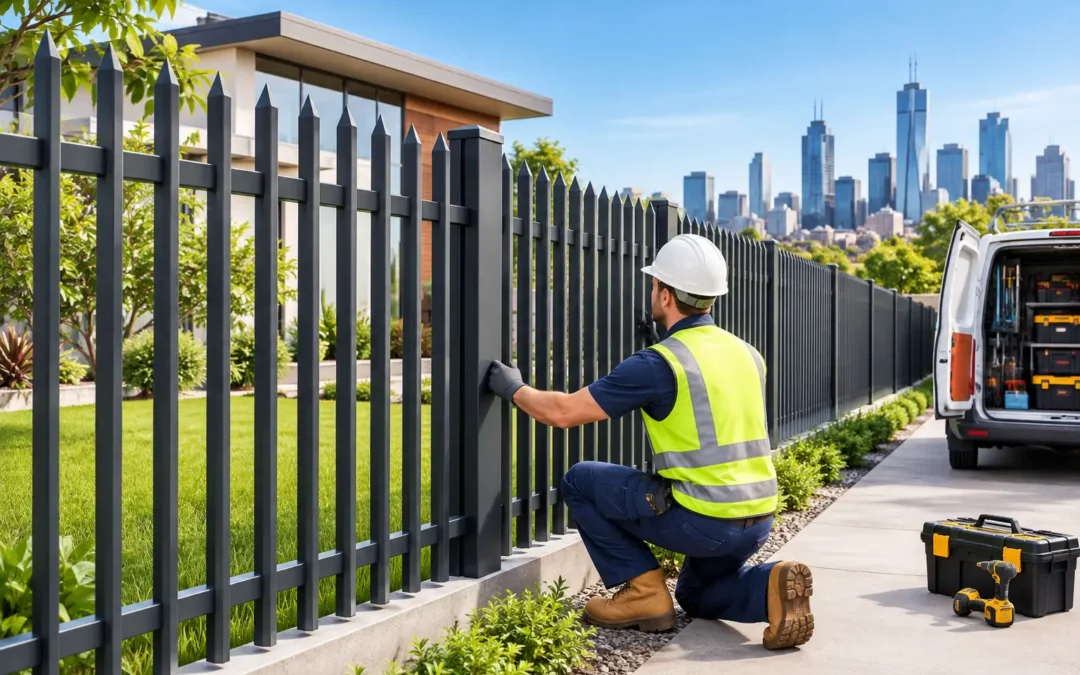
A perimeter fence has one job before anything else: make unauthorised access harder without creating ongoing maintenance headaches. That is why property owners and facilities teams looking for palisade fencing contractors Melbourne can rely on need more than a low price. They need a contractor who understands site security, gate access, ground conditions, safe installation and the finish expected around an active property.
Palisade fencing is a proven option for industrial yards, commercial premises, schools, utilities, storage areas and sites where a standard boundary fence does not provide enough deterrence. Its vertical steel pales, strong rails and difficult-to-climb profile create a clear, controlled boundary that stands up well to demanding conditions.
When palisade fencing is the right choice
Palisade fencing is designed for security-led applications. Unlike an open chain-link fence, the closely spaced vertical pales limit footholds and make cutting or climbing more difficult. The fence line remains visible from both sides, which helps with passive surveillance around car parks, loading areas, compounds and site boundaries.
It is particularly well suited to sites that need a tough, long-term perimeter but do not require total visual screening. Warehouses, factories, plant yards and commercial storage facilities are common examples. It can also suit education and community facilities where access needs to be clearly defined, provided the fence height, pale profile and gate arrangement are appropriate for the location and users.
The trade-off is that palisade fencing has a more formal security appearance than timber, Colorbond or many tubular fence styles. For a front boundary or a residential setting where privacy is the main goal, another system may be a better fit. A capable contractor will help identify whether palisade, tubular steel, welded mesh or chain-link fabric best matches the risk level, budget and look of the site.
What good palisade fencing contractors in Melbourne assess
A palisade fence is only as dependable as its layout, footings and installation. Before quoting, the practical questions should be worked through on site rather than guessed from a rough measurement.
The perimeter and ground conditions
Fence lines are rarely as simple as they appear on a plan. Sloping ground, retaining edges, underground services, existing concrete, drainage paths and vehicle crossings can all affect post spacing, footing depth and panel transitions. A tidy result depends on setting out the line properly so the fence follows the site without weak gaps below it or awkward changes in height.
For established commercial and industrial properties, removal of old fencing and access for equipment also need consideration. If work must be completed beside occupied offices, classrooms or operating yards, the installation sequence should protect people, vehicles and daily operations.
Security requirements, not just fence height
Height matters, but it is not the only security decision. Pale tops can be selected to suit the risk profile and site use, while rails, brackets, fixings and post sizes all contribute to the overall strength of the system. A fence around a storage compound may need a different specification from a school boundary, sporting facility or strata car park.
Security also depends on what happens at the openings. A well-built palisade fence can be undermined by a poorly planned pedestrian gate, a light-duty swing gate or a vehicle gate that does not close and latch consistently. Gate location, clear opening width, access control, hinges, drop bolts and emergency access should be considered as part of the perimeter, not added as an afterthought.
Compliance and site responsibilities
Relevant Australian Standards, local requirements and project specifications should inform the selected materials and installation method. Requirements can vary depending on the property type, fence location, pool or child-safety considerations, fire access, public interfaces and whether the works form part of a larger construction project.
For builders and facilities managers, clear scope is equally valuable. It helps avoid assumptions about demolition, spoil removal, service locating, access restrictions, gate hardware and making good around the new fence. A site-specific quote gives everyone a clearer path from approval to completion.
Selecting the practical palisade fence specification
There is no single palisade fence specification that suits every Melbourne site. The right design is based on the level of protection required, how visible the boundary needs to remain and the conditions the fence will face over time.
Galvanised and powder-coated steel components are often selected for durability and appearance. Coating choice matters where fencing is exposed to weather, moisture or harsher environments, including bayside and coastal parts of the Mornington Peninsula. Colour can be chosen to blend with existing buildings and gates, or to make the boundary clearly visible where safety calls for it.
Post and rail sizing should reflect the fence height, panel configuration, wind exposure and expected loading. It can be tempting to reduce costs by using a lighter specification, but the savings may be short-lived if posts move, gates sag or rails are damaged under pressure. The aim is a fence that performs consistently rather than one that merely looks adequate on installation day.
Where visibility through the fence is useful but a less aggressive profile is preferred, welded mesh or tubular fencing may be worth comparing. Where the main requirement is a flexible, economical enclosure for a large area, chain-link fencing can be a practical alternative. The best choice depends on the site and the level of security needed, not on a one-size-fits-all product recommendation.
Gates and access control need equal attention
Most perimeter problems occur at the point where people or vehicles enter. A palisade pedestrian gate should align with the fence, operate cleanly and suit the access method used on site. This may include key access, an intercom, card entry, a keypad or a simple latch arrangement for lower-risk areas.
Vehicle gates require additional planning. Swing gates need room to operate safely and should not interfere with internal traffic routes, footpaths or parked vehicles. Sliding gates can suit sites with limited swing space, although they need adequate run-back room and a properly prepared track or cantilever arrangement.
For busy commercial sites, consider how deliveries, visitors, staff and emergency services will move through the entry. A gate that is secure but impractical will often be left open, defeating the purpose of the perimeter. The right layout makes secure behaviour easier for the people using the site every day.
Why installation quality matters over the long term
Palisade fencing works hard. It faces wind, accidental contact, attempts at climbing, vibration near vehicle areas and the normal expansion and movement of the ground. Correctly installed posts, solid footings, accurately aligned panels and properly fitted gates are what allow the system to handle that work.
Clean workmanship also matters. On a finished project, fence lines should be straight, gate clearances should be consistent and the site should be left clear of unnecessary rubble and offcuts. On an operating property, reliable scheduling and clear communication are just as important as the physical installation.
Minster Fencing brings more than 40 years of operational experience and four generations of family fencing knowledge to Melbourne perimeter projects. The team supplies and installs fencing systems for residential, commercial, industrial, education and sporting sites, with practical advice based on the conditions in front of them.
Preparing for a palisade fencing quote
A few details will help a contractor provide a more useful quote from the outset. Have an approximate boundary length, intended fence height, photos of the site and details of any gates ready where possible. It also helps to identify access restrictions, existing fences to be removed, sloping ground, concrete areas and the level of security you are trying to achieve.
If plans are available, they can clarify property lines, gate positions and interfaces with other works. For larger projects, staged installation may be needed to keep sections of the site secure while construction or operations continue.
A palisade fence should give you confidence each time the site closes for the day. Arrange an obligation-free, site-specific quote to discuss the boundary, access points and fencing specification that will suit your property for the long term.