
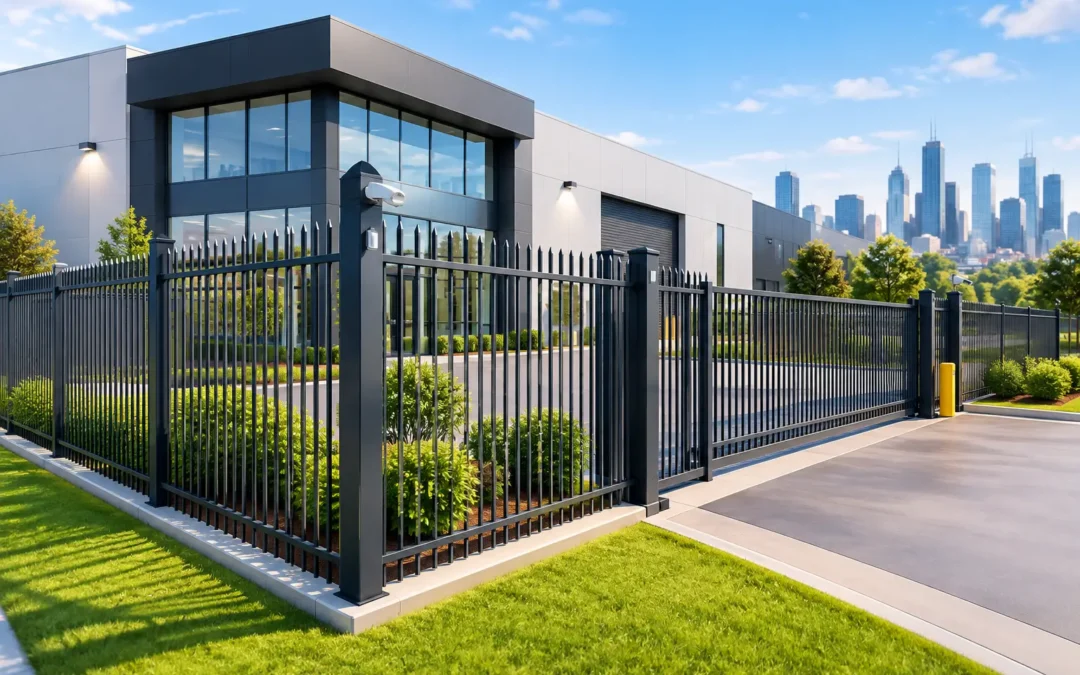
A damaged rear boundary, an easy-to-climb gate or an unprotected loading area can create a far bigger problem than a simple fencing repair. Effective commercial security fencing Melbourne businesses rely on is planned around how a site actually operates: where people arrive, where vehicles move, what needs to stay protected and who needs authorised access.
For a warehouse, school, strata complex, sporting facility or trade yard, the right fence must do more than mark a boundary. It needs to deter unauthorised entry, support safe access, stand up to regular use and suit the appearance and demands of the property. The best system is rarely chosen by height alone.
Start with the site, not the fence style
Every commercial site has different pressure points. A business park may need a presentable frontage with controlled pedestrian access. An industrial yard may need a difficult-to-climb perimeter and a wide vehicle gate. A school requires clear boundaries, safe separation between spaces and fencing that does not create hazards for students or staff.
Before selecting materials, consider what the fence is expected to do. Is the priority deterring trespass, protecting stock and equipment, controlling vehicle access, separating public and work areas, or containing activity within a sports ground? In many cases, it is a combination of all of these.
It also pays to look beyond the property line. Uneven ground, retaining requirements, nearby footpaths, drainage, existing services and the room available for gates can all affect the final design. A site inspection helps identify these details before installation begins, rather than discovering them halfway through the job.
Choosing commercial security fencing in Melbourne
Melbourne conditions and site types call for practical material choices. Exposure to weather, coastal air on the Mornington Peninsula, high-use access points and the visual expectations of neighbouring properties all need consideration. The most suitable fencing system depends on the level of security required, the layout of the site and the budget allocated for both installation and long-term maintenance.
Chain-link fencing for large perimeters
Chain-link, also known as chain-wire fencing, remains a dependable option for factories, storage yards, sporting grounds and large commercial boundaries. It is economical over longer runs, provides visibility across the site and can be specified at different heights and wire gauges to suit the application.
For a higher-security perimeter, chain-link can be paired with secure gates, top treatments and properly designed posts and rails. It is not always the best choice for a prominent customer-facing frontage, where appearance matters as much as security. However, for practical containment and broad site coverage, it is hard to overlook.
Welded mesh for stronger security and visibility
Welded mesh fencing offers a more rigid, refined finish than standard chain-link. Its close wire construction makes it harder to cut or climb, while still allowing staff, security cameras and neighbours to see through the boundary.
This makes welded mesh well suited to schools, commercial premises, utilities areas, storage compounds and sites where security needs to be balanced with a neat presentation. It can also work well around air-conditioning equipment, bin enclosures and other services that need protection without being hidden completely.
Tubular fencing for frontages and access areas
Tubular fencing is commonly selected for commercial frontages, apartment buildings, education sites and pedestrian entry areas. It creates a clean, professional boundary and can be designed with gate systems to manage access without making the site feel closed off.
The spacing, height and configuration matter. A low tubular fence may define a boundary but offer limited security. A taller system with suitable rails, secure fixings and access-controlled gates provides a more capable solution. It is a good example of why a fence should be specified for its purpose, not simply selected from a standard product list.
Palisade fencing for high-risk sites
Palisade fencing is designed for sites that require a clear physical deterrent. Its steel pales and pointed profile make climbing difficult, while its strength suits industrial facilities, infrastructure assets, high-value storage areas and other higher-risk locations.
It is a more assertive-looking system than tubular or mesh fencing, so it will not suit every development. For sites where perimeter security is the main concern, though, palisade fencing offers a serious and durable option.
Gates are part of the security system
A well-built fence can be undermined by the wrong gate. Commercial gates need to match the traffic using them, whether that is staff on foot, visitors, delivery vehicles, forklifts or larger trucks.
Swing gates can suit smaller entries where there is enough clearance for the leaves to open safely. Sliding gates are often a better fit for driveways and industrial access points, particularly where vehicle movements are frequent or space behind the gate is limited. The track, posts, latching arrangement and ground conditions all need to be considered as part of the installation.
For some sites, pedestrian gates, self-closing mechanisms, coded entry, intercoms or access-control hardware may be appropriate. Bollards can also protect gates, building corners and equipment from accidental vehicle impact. Fixed bollards provide a permanent barrier, while removable bollards can keep access flexible when occasional vehicle entry is required.
Compliance, safety and installation quality
Commercial fencing has to work safely as well as securely. Relevant Australian Standards, local requirements and the particular needs of the site should inform the design and installation. This is especially important around schools, public-facing premises, pools, workplaces, car parks and areas used by children.
Posts need to be properly set, fence lines should follow the ground correctly, and gates must operate cleanly without dragging, binding or creating avoidable hazards. Poor tensioning on chain-wire, inadequate footings, weak gate posts or rushed finishing can shorten the life of an otherwise suitable fence.
A professional contractor will also consider access during the works. On active commercial sites, installation may need to be staged to keep staff, customers, students or tenants safe and to maintain essential entry points. Clean work practices and reliable scheduling are not extras – they are part of a job completed properly.
Common mistakes when planning a security fence
The most common mistake is treating security fencing as a single product purchase. A fence is a system made up of the perimeter, posts, gates, locks, access points and the way people use the site each day. If one part is weak, the overall result is weaker.
Another issue is choosing a fence that is too light for the environment. A low-cost option may look acceptable when first installed, but high traffic, attempted entry, vehicle contact or exposure can quickly reveal where corners were cut. The cheapest quote is not always the best value if it leads to early repairs, access problems or replacement.
It is also worth avoiding unnecessary over-specification. Not every site needs palisade fencing or an automated gate. A carefully designed welded mesh or tubular system may provide the right level of security at a more sensible cost. The aim is a solution that fits the risk, the site and the way the business operates.
A practical approach to getting the right result
A clear brief makes quoting and installation more straightforward. Identify the boundary length, the areas that need the most protection, the type and frequency of gate access, any existing fence to be removed and whether the work needs to happen around trading hours or site operations.
Photos and plans can be useful, but an on-site assessment is often the best way to confirm levels, access constraints and suitable fence types. It also gives you the chance to discuss finish, height, gate placement and any bollards, retaining work or storage cages required as part of the broader project.
Minster Fencing brings more than 40 years of fencing experience and four generations of family trade knowledge to commercial projects across Melbourne Metro, the Mornington Peninsula and South Eastern suburbs. The team can supply and install chain-link, tubular, welded mesh, palisade fencing, gates and bollards with a focus on dependable workmanship and Australian Standards compliance.
The right commercial fence should make a site easier to manage every day, not add another maintenance concern. A site-specific, obligation-free quote is the practical next step when you need a perimeter that looks right, operates properly and protects what matters.