
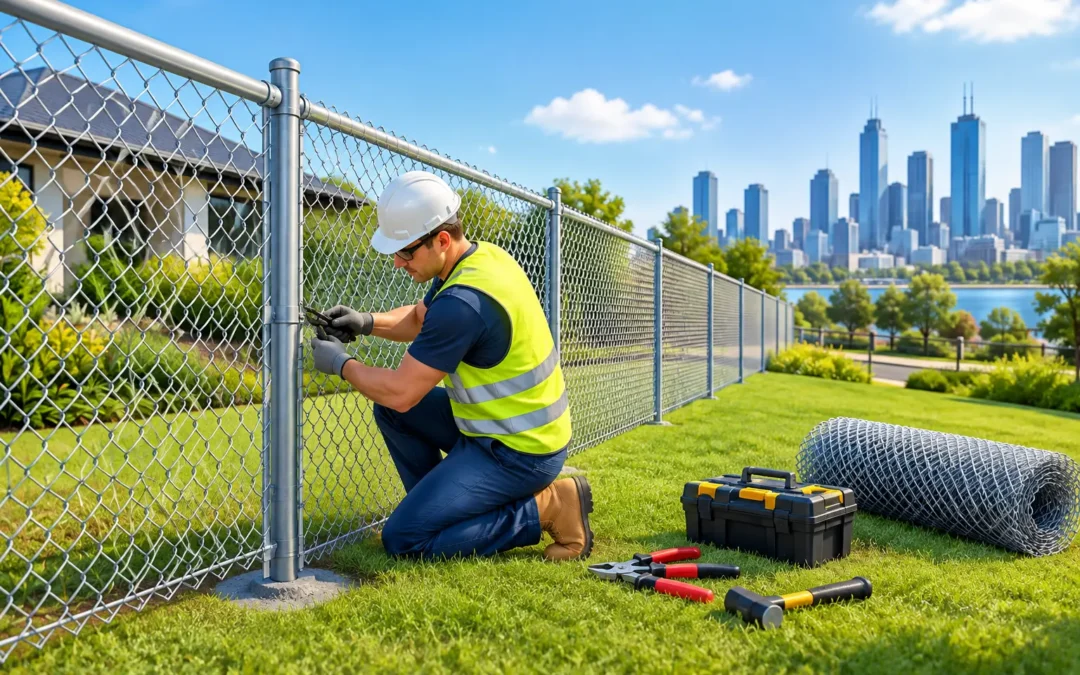
A chain wire fence has a job to do. It may need to keep a dog safely within a backyard, define a commercial boundary, protect equipment, control access to a school ground or contain activity around a sporting facility. For chain wire fence installation Melbourne property owners and site managers can depend on, the right outcome starts with the site, the intended use and the quality of the framework behind the mesh.
Chain wire fencing is often chosen because it is practical, economical across long runs and allows visibility through the boundary. That visibility can be an advantage for car parks, schools, storage yards and sporting areas, but it also means chain wire is not always the best choice where privacy is the priority. A proper site assessment helps determine whether chain wire alone is suitable or whether a different fencing system, screening or gate arrangement is needed.
What a chain wire fence system includes
People sometimes focus on the wire fabric and overlook the structural parts that make the fence perform over time. The chain wire fabric is important, but the posts, rails, strainers, footings, tension wire and fittings carry the load and hold the line of the fence.
A typical installation uses terminal or strainer posts at ends, corners and changes of direction. Intermediate posts support the fence between those points. Top rails or supporting wires help maintain alignment, while bottom tension wire can reduce the risk of fabric being pushed up or lifted at ground level. The fabric is then stretched and fixed to the framework with suitable ties and fittings.
The appropriate post size, spacing, wire gauge and fence height depend on the site. A low residential pet enclosure has different demands from a high industrial perimeter, a tennis court or a school boundary. Gates also place additional load on adjacent posts, so they need to be allowed for in the original layout rather than treated as an afterthought.
Choosing the right fence for the job
Chain wire is a flexible fencing solution, not a one-size-fits-all product. The best specification depends on what the fence must contain, exclude or protect.
For residential properties, chain wire fencing is commonly used for side boundaries, garden areas, pet runs, rural-style blocks and utility spaces. Galvanised fabric offers a straightforward hard-wearing finish, while black or green PVC-coated chain wire can be a better visual fit around gardens and landscaped areas. If the boundary faces a neighbour or public area and privacy is required, timber, Colorbond or purpose-designed screening may be more appropriate.
Commercial and industrial sites often need stronger framework, higher fencing, controlled access points and a layout that works around driveways, services and loading areas. In these settings, chain wire can form an effective perimeter fence, particularly when paired with lockable pedestrian gates, vehicle gates, barbed wire where appropriate, or a more security-focused system such as welded mesh or palisade fencing.
Sports clubs and schools may require higher chain wire fencing to keep balls within courts and playing areas while maintaining sightlines. Tennis court fencing, for example, needs careful attention to height, post footing depth, fabric tension and gate placement. A poorly tensioned fence can sag, rattle or lose its neat appearance well before it should.
Site conditions matter in Melbourne
Melbourne sites can vary sharply from one suburb to the next. A level block with clear access is very different from a sloping Mornington Peninsula property, a tight inner-suburban boundary or an active industrial facility with limited shutdown time.
Before installation, the contractor should assess the fence line, levels, access, existing structures, drainage and any obstacles such as trees, retaining walls or concrete. Underground services must be considered before post holes are dug. Where a fence crosses uneven ground, the fabric may need to follow the contour or step down in sections. Each approach has a different appearance and practical result.
Access also affects the installation method and programme. A wide side access may allow materials and equipment to be brought directly to the work area. A narrow path, established landscaping or a busy site may require more careful staging. Planning these details early helps avoid damage, delays and unexpected variations once work has started.
Fence height, security and compliance
Height is one of the first decisions in a chain wire fence installation. It should be based on the purpose of the fence, not just what looks proportionate from the street. A fence designed to contain pets may only need modest height, while a security boundary or ball-stop fence will require a higher specification.
Security is also about more than height. The strength of the posts, the spacing of rails, the fabric gauge, the footing depth and the gate hardware all affect how well the fence resists impact and unauthorised access. At ground level, gaps should be considered carefully where dogs, wildlife or intruders could pass underneath. In other locations, clearance may be necessary to accommodate drainage or site maintenance.
Fencing work should be designed and installed with relevant Australian Standards, local requirements and site-specific safety needs in mind. Requirements can vary for pool barriers, schools, public-facing sites, sporting facilities and commercial developments. A professional contractor can identify when a standard chain wire solution needs to be adjusted to suit the application.
Gates should be planned with the fence
A gate is often the most-used part of a fencing project, and it deserves the same attention as the fence line. Pedestrian gates need to open in a practical direction, clear the ground surface and provide reliable latching. Vehicle gates need adequate opening width, strong hinge posts and room for vehicles to enter without obstructing a road, driveway or footpath.
Swing gates are a common choice where there is sufficient clearance. Sliding gates may suit driveways with limited swing space, though they require a clear run-back area and suitable ground conditions. On commercial and industrial sites, access control, padlock provisions, automation compatibility and emergency access should be discussed before fabrication begins.
Matching gate infill to the chain wire fence keeps the boundary consistent and visible. In higher-security applications, the gate frame and locking arrangement may need a heavier-duty specification than the surrounding fence.
Why workmanship makes the difference
A chain wire fence can look simple once complete, but installation quality is easy to recognise over time. Crooked posts, shallow footings, loose fabric and poorly braced corners can lead to movement, sagging and premature repairs. These issues are particularly noticeable on long boundaries and high fences, where tension loads are greater.
Good installation begins with accurate set-out. Posts need to be positioned in a straight line, set to suitable depths and allowed to cure before the fabric is placed under tension. Corners, ends and gate posts require correct bracing. The fabric should be evenly stretched, securely tied and finished neatly around terminals and gates.
Clean site practices matter as well. Property owners and facilities managers should expect the work area to be managed carefully, excess spoil and packaging removed where included in the scope, and access maintained as agreed. Reliable scheduling and clear communication are just as valuable as the materials used on site.
Getting an accurate quote
The quickest way to obtain a useful quote is to provide the approximate fence length, preferred height, location, intended use and any gate requirements. Photos and a simple site plan can help, especially where there are slopes, retaining walls, existing fences or restricted access.
A site-specific quote should clarify the proposed fence type, fabric finish, framework, gates, demolition or removal requirements, and any assumptions about site access or ground conditions. This makes it easier to compare proposals properly. A low initial price may not include adequate posts, bracing, gate hardware or preparation work, which can change the real cost later.
Minster Fencing brings more than 40 years of fencing experience and four generations of family trade knowledge to projects across Melbourne Metro, South Eastern Melbourne and the Mornington Peninsula. The team can assess whether chain wire is the right fit for a residential, commercial, education, sports or industrial site, then provide an obligation-free quote based on the actual conditions.
A well-planned chain wire fence should give you a straight, secure and dependable boundary without creating unnecessary maintenance. Start with the purpose of the fence, be clear about access and security needs, and arrange a site assessment before committing to a specification.